

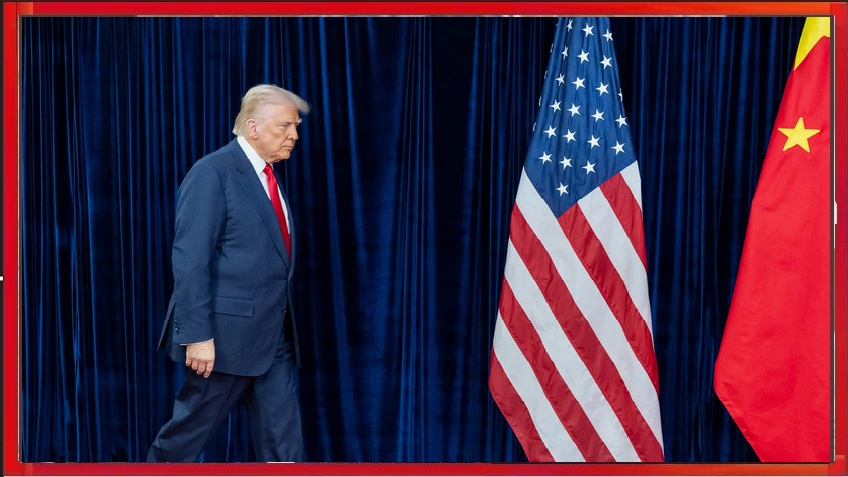
In a moment that stunned diplomats and defense analysts alike, President Donald Trump reignited one of the world’s deepest nuclear anxieties. Just minutes before meeting Chinese President Xi Jinping, Trump declared that the United States would resume nuclear weapons testing — abruptly ending a self-imposed freeze that had lasted more than three decades.
The announcement, delivered through a post on Truth Social during Trump’s Asia tour, was as theatrical as it was alarming. “The Department of War has been instructed to proceed with testing on an equal basis,” he wrote — a phrase that immediately sparked debate across global capitals. Was this a threat of live detonations, or a show of missile strength meant to rattle adversaries and reassure allies?
Whatever the intent, the timing and tone made clear that Trump was prepared to gamble with one of the most sensitive pillars of post–Cold War stability.
A Break with Three Decades of Restraint
The U.S. has not conducted a nuclear explosion since 1992, relying instead on computer modeling and non-nuclear missile launches to ensure deterrence. Although Washington never ratified the Comprehensive Nuclear Test Ban Treaty, every administration since Bill Clinton’s has observed its principles — seeing restraint as both moral and strategic.
China last tested a nuclear device in 1996, and Russia’s final confirmed detonation was in 1990. But the quiet equilibrium that followed those years now appears to be unraveling.
A Reaction to Russia’s Nuclear Theater
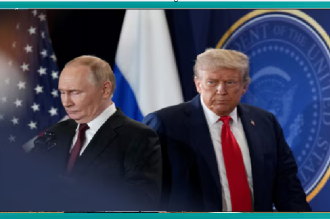
Trump’s declaration reportedly came aboard Marine One as he headed to the summit with Xi, and many officials believe it was a direct reaction to Russia’s recent nuclear brinkmanship. Only weeks earlier, Vladimir Putin had showcased two next-generation nuclear delivery systems — the Burevestnik cruise missile and the Poseidon underwater drone — both capable of carrying nuclear warheads.
While Western analysts remain skeptical of their readiness, the symbolism of Russia’s demonstrations may have triggered Trump’s decision. His characteristic instinct for power optics — to “match threat with threat” — seems to have overridden the long-standing caution of U.S. nuclear policy.
Scientists Divided, Strategists Alarmed
Inside America’s defense establishment, reactions are mixed. Nuclear scientists argue that live testing is unnecessary in the era of supercomputing and advanced simulation, which can model warhead reliability with exceptional precision. But proponents of testing insist that as the U.S. modernizes its aging arsenal, some real-world validation is inevitable.
The debate, however, extends beyond science — it touches the very architecture of global arms control.
The Treaty on the Brink
Trump’s announcement comes at a precarious moment: just 100 days before the expiration of New START, the last remaining nuclear arms treaty between the United States and Russia. The agreement limits each side to 1,550 deployed strategic warheads.
While the treaty cannot be formally renewed again, Putin had floated the idea of informally observing its limits for another year. Trump initially signaled openness but later accused Moscow of using the extension as cover to expand its influence in Ukraine.
The erosion of trust between Washington and Moscow now risks leaving the nuclear world without any formal restraint mechanisms for the first time in half a century.
China’s Quiet Expansion
China, meanwhile, has been expanding its own nuclear capabilities at a pace that worries U.S. intelligence officials. Once known for maintaining a “minimum deterrent,” Beijing under Xi Jinping has built new missile silos, hardened command structures, and accelerated warhead production.
Current U.S. assessments predict China could possess around 1,000 deployed nuclear warheads by 2030 — and as many as 1,500 by 2035, effectively matching the arsenals of the United States and Russia.
Trump has expressed optimism that he could draw Xi into future arms control talks, but Beijing has consistently rejected such overtures, arguing that it will only negotiate once it reaches strategic parity.
A Dangerous New Threshold
If Washington follows through on nuclear testing, experts warn, it could open a Pandora’s box. Britain and France may feel pressured to demonstrate deterrence capability; India and Pakistan could mirror the escalation; and North Korea — which last conducted a confirmed nuclear test during Trump’s own first term — might resume testing with renewed defiance.
In the delicate geometry of nuclear politics, perception often matters as much as payload. By reviving the specter of nuclear detonations, Trump has not only unsettled long-held international norms but also reshaped the stage on which the next global arms race could unfold.
What began as a political gesture before a summit may well mark the beginning of a new nuclear era — one defined not by treaties and restraint, but by spectacle and uncertainty.