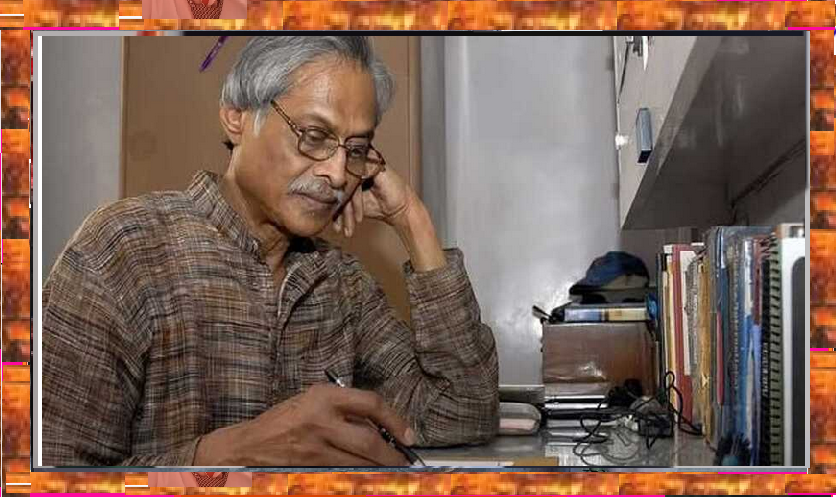
There are very few people in public life who manage to be genuinely exceptional at two completely different things. Jagannath Prasad Das — JP Das, as most of literary India knew him — was one of those rare people. A decorated IAS officer. A poet who changed the way Odia literature sounded. A theatre person. An art historian. A man who turned down one of India’s most prestigious literary awards because his principles wouldn’t let him accept it.
He passed away on June 3, 2026, at his home in Bhubaneswar. He was 90. Age-related ailments, his family said. But in a very real sense, Odisha lost something that can’t quite be named in a medical report.
Born in Puri, Built Across a Lifetime
JP Das was born on April 26, 1936, in Puri district — a place already soaked in culture, mythology and artistic tradition. Something about that origin seems fitting in retrospect. He started writing as a teenager and was already drawing attention in literary circles by the early 1950s. But life had other plans, at least temporarily.
He pursued higher education, completed a Master’s degree in Political Science, and then cracked one of India’s most competitive examinations. In 1958, Jagannath Prasad Das joined the Indian Administrative Service. Literature, for the next decade and a half or so, would have to wait.
The Bureaucrat Who Never Forgot He Was a Writer
His administrative career was not the kind that fades into paperwork and forgotten files. JP Das served in several significant postings, but one stands out clearly — his time as Collector of Kalahandi between 1963 and 1966.
Kalahandi during those years was in the grip of a devastating drought and famine. It was the kind of posting that either breaks an officer or reveals what they’re really made of. Kapoor handled it with what people around him described as genuine compassion — focused relief operations, committed public welfare work, real engagement with people whose lives were falling apart. That posting earned him national recognition and, more importantly, the respect of the people he served.
He kept serving, kept working, kept accumulating the kind of administrative experience that takes decades to build. And then, in 1984, he did something that genuinely surprised people — he took premature retirement from the IAS. He was done with governance. Literature and art had been waiting long enough.
“Prathama Purusha” and the Return to Writing
After a gap of nearly fifteen years — years spent inside the bureaucracy — JP Das came back to creative writing. His return wasn’t quiet. In 1971, he published Prathama Purusha (First Person), a poetry collection that hit Odia literary circles like a change in weather.
What made it different? The language, for one thing. Colloquial, direct, emotionally honest in a way that formal literary Odia often wasn’t. Contemporary in sensibility without being shallow. It announced that this wasn’t a retired officer dabbling in verse — this was a serious literary mind that had been waiting, watching, and thinking for years before finally putting it all down.
That collection effectively marked the beginning of JP Das’s second life. And that second life turned out to be extraordinarily productive.
The Body of Work He Left Behind
Over the decades that followed, JP Das wrote across genres with a fluency that most writers spend their whole careers chasing. Poetry, novels, short stories, drama, literary criticism — he moved between them as though walls between forms simply didn’t apply to him.
His historical novel Desha Kaala Patra is considered one of the finest works in Odia literature, full stop. It portrays Odisha’s transformation through the colonial era with a depth and nuance that earned it translations into multiple Indian languages. That’s not a minor achievement — regional-language novels that make the leap into other Indian languages because of sheer literary quality are genuinely rare.
His poetry collections — Prathama Purusha, Parikrama, Ahnika — each added something distinct to the body of work. His plays, including Suryasta Purbaru (Before the Sunset) and Sundara Das, received critical acclaim and were translated and performed across the country.
As a short story writer, he was known for psychological depth and a precise understanding of human emotion — the kind of fiction that stays with you after the last page.
The Art Historian Nobody Fully Expected
Here’s something that even many admirers of his literary work didn’t fully clock — JP Das held a PhD in Art History from the University of Allahabad. And he put it to serious use.
He authored scholarly works that documented Odisha’s artistic heritage in ways that mattered for preservation and study — Puri Paintings, Chitra-Pothi, Palm-Leaf Miniatures. These weren’t coffee table books. They were genuine contributions to the academic record of a state whose artistic traditions are among the richest in India and still not fully understood outside the region.
He also translated literary works into English and edited anthologies, consistently working to bring Odia writing to wider audiences. The man was quietly building bridges his entire life.
The Award He Refused
In 1991, his poetry collection Ahnika was selected for the Sahitya Akademi Award — one of India’s most prestigious literary honours. JP Das turned it down.
He didn’t make a dramatic statement about it. He didn’t turn it into a public moment. He simply declined, and the decision reflected what people close to him already knew — his intellectual independence wasn’t a pose. It was how he actually operated.
What makes the story even more interesting is what happened afterward. Despite the refusal, the Sahitya Akademi went ahead and published Ahnika in Hindi, Bengali, Assamese and English. They acknowledged the literary significance of the work even without the author’s cooperation on the award. That’s a particular kind of vindication.
He did receive the Saraswati Samman in 2006 — one of India’s highest literary honours — along with the Odisha Sahitya Akademi Award and the Sarala Samman, among other recognitions. He also served as president of the Poetry Society (India) for nearly fourteen years, mentoring writers and nurturing literary culture with the same quiet consistency that marked everything he did.
One Last Act of Service
Even the manner of his departure carried something of the man’s character. Honouring his final wish, JP Das’s family donated his body to AIIMS Bhubaneswar for medical education and research.
Someone who spent his entire life in service — first to the state as an IAS officer, then to Odia language and literature, then to the preservation of his state’s artistic heritage — chose to keep serving even after death. There’s a certain coherence to that which feels entirely like him.
What Odisha Has Lost
Tributes poured in from across the country — political leaders, writers, artists, scholars. Former Chief Minister Naveen Patnaik called it an “irreparable loss” to the literary world. Current Chief Minister and senior public figures echoed similar sentiments.
But beyond the official tributes, what JP Das represented was something increasingly rare — a person who inhabited multiple worlds fully, without compromising any of them. He was a serious administrator when administration demanded it. He was a serious writer when writing demanded it. He was a serious scholar when scholarship demanded it. He never seemed to treat any of these as secondary.
For generations of Odia readers, and for anyone who has encountered his work in translation, JP Das remains a reminder of what a life in letters — and in public service — can look like when it’s lived with genuine conviction.
He was 90. He had done enough for several lifetimes. But that doesn’t make the silence any easier.