Here’s Why That MattersPM Modi’s Trusted PMO Advisor Tarun Kapoor Gets Another Year — Here’s Why That Matters
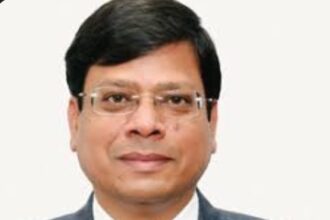
If there’s one name that keeps showing up quietly but consistently in conversations about India’s energy policy and infrastructure push, it’s Tarun Kapoor. And he’s not going anywhere anytime soon.
The Centre has officially extended the tenure of Kapoor — a retired 1987-batch IAS officer from the Himachal Pradesh cadre — as Advisor to Prime Minister Narendra Modi in the Prime Minister’s Office. The extension, cleared by the Appointments Committee of the Cabinet, kicks in from June 10, 2026, and runs for one more year, taking him through to June 10, 2027. Unless further orders come in earlier, of course.
The DoPT order is straightforward enough on paper. But the decision itself says quite a bit about how the Modi government values continuity in its closest policy circles.
A Man Who’s Been in the PMO Since 2022
Kapoor first walked into the Prime Minister’s Office as Advisor on May 2, 2022 — roughly six months after retiring as Petroleum Secretary in November 2021. That initial appointment was for two years.
When the NDA government’s second term wrapped up and elections came around, his tenure was briefly kept alive on a co-terminus basis — essentially tied to the Prime Minister’s own term. After PM Modi returned to office in 2024, Kapoor was reappointed for another two-year stretch starting June 10, 2024. And now, with that term ending, he’s been handed one more year.
That’s four-plus years inside the PMO for a retired officer. That’s not routine. That’s someone the Prime Minister’s office genuinely relies on.
So Who Exactly Is Tarun Kapoor?
The man has a career that spans well over three decades in civil service, and it’s the kind of resume that reads like a tour through some of India’s most consequential policy moments.
As an IAS officer in Himachal Pradesh, he held ground-level postings that gave him real administrative muscle — District Magistrate of Chamba, Additional Chief Secretary, and head of multiple state departments ranging from Power and Environment & Forests to Public Works and Food & Civil Supplies. That’s a wide sweep of domains, and it built the kind of cross-functional understanding that tends to be rare even among senior bureaucrats.
But it was his central government postings that really put him on the map nationally.
The Renewable Energy Chapter
If you had to pick one chapter of Kapoor’s career that defines his contribution to modern India, it’s probably his time at the Ministry of New and Renewable Energy. As Joint Secretary there, he was deeply involved in shaping and driving India’s National Solar Mission — the ambitious programme that essentially launched the country’s large-scale pivot to solar energy.
India’s solar capacity today is among the largest in the world. That didn’t happen overnight, and it didn’t happen without people inside the government who understood both the technical landscape and the policy levers well enough to make things move. Kapoor was one of those people. His work during that period is widely credited with accelerating India’s clean energy transition and strengthening its credibility in global climate and energy conversations.
From DDA to Petroleum Secretary
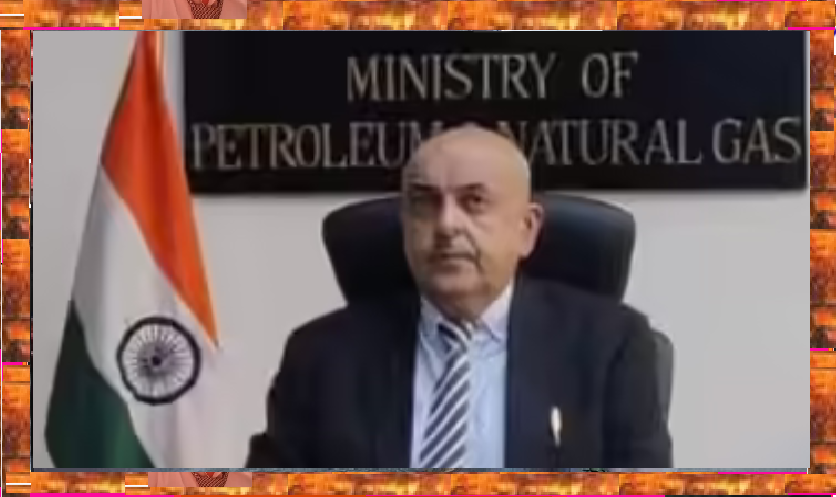
Before his retirement, Kapoor also served as Vice-Chairman of the Delhi Development Authority — a posting that put him in the thick of urban planning and infrastructure decisions for the capital. Then came the big one: Petroleum Secretary, one of the most consequential positions in the entire energy sector.
His stint as Petroleum Secretary coincided with something nobody had a playbook for — COVID-19. During the pandemic, Kapoor was part of the machinery that implemented the government’s free LPG cylinder distribution programme for vulnerable households. Getting cooking fuel to people who couldn’t afford it during a national lockdown — that’s not a glamorous policy win, but it was a real one. He retired from that position in November 2021.
What Does He Actually Do in the PMO?
Since joining the Prime Minister’s Office, Kapoor has been the go-to advisor across a set of sectors that sit right at the heart of India’s development agenda. Economic policy, infrastructure development, energy security, climate change and sustainability, public sector reforms, and oversight of national flagship projects — that’s his brief.
He’s also been involved in reviewing major initiatives including refinery expansions, energy transition programmes, and rural development schemes. In a setup like the PMO, that kind of role means being the person who can cut through complexity and tell the Prime Minister what’s actually working, what’s stalling, and what needs a push.
Why Extend Him Again?
That’s the obvious question, and the answer isn’t complicated.
The government is currently running hard on several fronts simultaneously — infrastructure expansion, green energy targets, economic reform, and long-term competitiveness. These aren’t short-cycle projects. They require people who have been in the room from the beginning, who know the history of decisions, the reasons behind certain choices, and where the pressure points are.
Bringing in someone new to the PMO advisory structure right now would mean months of onboarding before they could add real value. Kapoor already knows the files, knows the stakeholders, and — crucially — knows how this particular Prime Minister thinks about these issues. That’s not something you replace casually.
Policy observers watching this appointment see it clearly as a continuity play. And given everything that’s on the government’s plate right now, that reading makes sense.
The Bigger Signal
There’s something worth noting beyond the individual appointment. The fact that a retired officer has now been continuously associated with the PMO for over four years — across re-elections, new terms, and fresh mandates — tells you something about how the current government approaches its inner advisory circle. It’s not purely about hierarchy or seniority in the traditional sense. It’s about domain expertise and trust.
Tarun Kapoor built his credibility over 33 years of public service, across some of the toughest assignments in Indian administration. His presence in the PMO through June 2027 means that expertise stays accessible to the country’s top decision-maker during what is shaping up to be a genuinely pivotal stretch for India’s economic and energy future.
Quiet, experienced, and clearly still in demand — that’s about as good a summary as any for where Kapoor stands right now.