

Senior Retired IFS Officers Explore AI-Powered Wildlife Conservation Technologies at KIIT, Back Stronger Academia-Forest Department Collaboration
Senior retired IFS officers visited KIIT Deemed to be University to review AI and engineering-driven wildlife conservation technologies developed in partnership with Odisha’s Forest Department. The innovations target elephant protection, Olive Ridley turtle conservation, blackbuck monitoring, and biodiversity management.
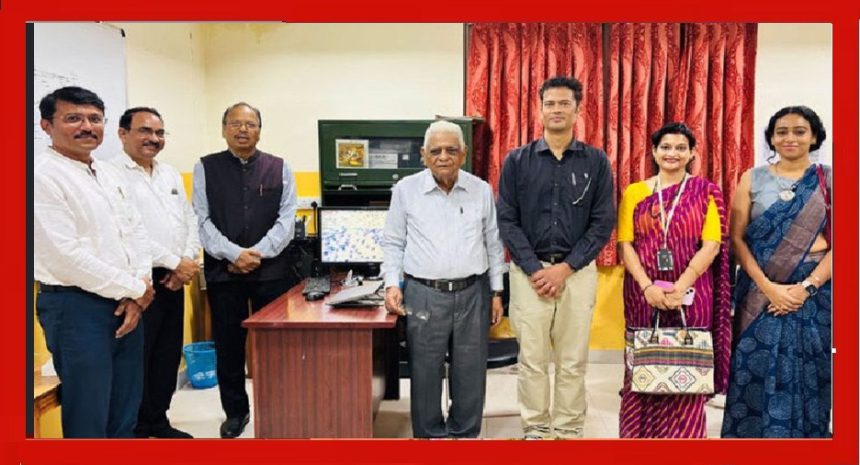
As wildlife conservation increasingly embraces cutting-edge technology, KIIT Deemed to be University (KIIT-DU) has emerged as a promising hub where engineering, artificial intelligence and ecological research are coming together to address some of India’s most pressing conservation challenges. In a major boost to these efforts, two distinguished retired Indian Forest Service (IFS) officers recently visited the university to examine a range of innovative technologies developed to support wildlife protection across Odisha and beyond.
The visit, held on June 24, 2026, brought together experienced forest administrators, researchers, engineers and legal experts for detailed discussions on how emerging technologies can transform wildlife management. The interaction focused on practical solutions designed for use in forests, where they can help frontline officials monitor wildlife, reduce threats and strengthen biodiversity conservation through smart engineering interventions.
The programme reflected a growing national emphasis on combining scientific innovation with field-based conservation practices. Instead of relying solely on conventional monitoring methods, the collaboration showcased how advanced engineering and AI-enabled systems can provide forest authorities with more effective tools for protecting endangered and vulnerable species.
Veteran Forest Officers Review Innovative Conservation Projects
Leading the delegation were two highly respected retired officers with decades of experience in forest governance and wildlife conservation.
Among them was Dr. Debabrata Swain (Retd. IFS), former Member of the Lokayukta and former Principal Chief Conservator of Forests and Head of Forest Force (PCCF & HoFF), Odisha. Joining him was Saroj Kumar Patnaik (Retd. IFS), former Chief Wildlife Warden of Odisha and former Member of the Central Empowered Committee (CEC) of the Supreme Court of India.
Accompanying the delegation was Vishwanath Neelannavar, IFS, Regional Chief Conservator of Forests (RCCF), Berhampur Circle. He guided the visiting dignitaries through the university’s research laboratories and introduced them to the various conservation technologies currently under development.
The visit provided the retired officers with an opportunity to interact directly with scientists, faculty members and research teams responsible for designing solutions aimed at improving wildlife monitoring, habitat protection and conservation planning.
Partnership Between KIIT and Odisha Forest Department Driving Innovation
The technologies demonstrated during the programme are the outcome of a collaborative initiative between the Forest Innovation Cell under the Office of the RCCF, Berhampur Circle, and the Defence Research Laboratory at KIIT’s School of Mechanical Engineering.
The partnership has been established with a clear objective – creating practical, field-ready engineering solutions that can assist the Forest Department in addressing increasingly complex conservation challenges.
Instead of limiting research to academic laboratories, the collaboration is designed to ensure that innovative technologies can eventually be deployed in real forest landscapes, where they can support wildlife officials in carrying out surveillance, monitoring animal movement, protecting habitats and responding to conservation emergencies more efficiently.
The initiative also reflects the growing recognition that biodiversity conservation today requires multidisciplinary expertise involving engineers, wildlife biologists, environmental scientists, data specialists and policymakers working together.
AI and Engineering Solutions Target Multiple Wildlife Species
During the demonstrations, the visiting dignitaries reviewed several advanced prototypes and technology-driven conservation systems developed specifically for protecting some of India’s most vulnerable wildlife species.
The research projects cover a broad spectrum of conservation priorities, including the protection of wild elephants, conservation of blackbuck populations, monitoring and safeguarding Olive Ridley turtles, technology-assisted wildlife management and engineering-based biodiversity conservation solutions.
Researchers explained how these systems are designed to strengthen wildlife surveillance while also improving habitat management and conservation planning.
Many of the technologies are intended to provide forest officials with better decision-support tools, enabling quicker responses to wildlife-related incidents while enhancing long-term ecological monitoring.
The integration of artificial intelligence, mechanical engineering and modern sensing technologies into wildlife conservation has the potential to improve both operational efficiency and scientific understanding of animal behaviour in natural ecosystems.
Innovation Efforts Already Earn Design Patents
One of the biggest highlights presented during the visit was the intellectual property generated through the collaborative research programme.
According to KIIT, the interdisciplinary team has already secured two granted design patents, marking an important milestone for the university’s conservation technology initiatives.
The researchers are also pursuing several additional intellectual property rights related to wildlife conservation innovations developed under the collaboration.
These achievements underline the increasing role of engineering-led research in solving environmental problems that have traditionally relied on manual observation and conventional conservation techniques.
University officials noted that protecting biodiversity today demands innovative solutions capable of addressing rapidly changing ecological conditions, human-wildlife conflict and habitat degradation through smarter technologies.
Faculty Members Lead Collaborative Research Programme
The visit was coordinated by Dr. Tulishree Pradhan, Associate Professor at KIIT Law School, along with Dr. Ipsita Das, Associate Dean (Postgraduate Programmes) and Associate Professor at the same institution.
The programme also witnessed the participation of S. Jyotiranjan, Central Government Counsel and Secretary General of the KIIT Centre for International Arbitration and Mediation.
The technical demonstrations were led by Prof. Manoj Ukamanal, who has been supervising the research initiatives and guiding the development of the innovative conservation technologies.
The interaction allowed the visiting officers to understand not only the technical aspects of the projects but also the interdisciplinary approach adopted by the university, where legal experts, engineers, researchers and conservation professionals work together to develop practical solutions.
Senior University Leadership Participates in the Interaction
The event also saw the participation of several senior university administrators and academic leaders.
Among those present were Dr. Jnyana Ranjan Mohanty, Registrar of KIIT Deemed to be University, and Prof. P. C. Mishra, Dean of the School of Mechanical Engineering.
They were joined by faculty members, researchers, deans and members of the university’s research and development teams, all of whom contributed to discussions on expanding the role of technology in environmental conservation.
The interaction created a valuable platform for exchanging ideas between experienced forest administrators and academic researchers working at the forefront of technological innovation.
Discussions Focus on Real-World Deployment
One of the central themes of the visit was ensuring that laboratory innovations ultimately reach the field, where they can make a measurable difference in conservation outcomes.
The retired IFS officers appreciated the quality of research being undertaken at KIIT and encouraged the university to continue working closely with the Forest Department to accelerate deployment of these technologies in forests.
Discussions revolved around strengthening partnerships between academic institutions, government agencies, scientists, engineers and technology developers.
Participants also explored ways to improve knowledge sharing, encourage interdisciplinary research and create scalable conservation technologies capable of supporting wildlife managers across different ecological landscapes.
The emphasis remained on translating research into practical tools that frontline forest personnel can use to enhance biodiversity management and improve protection for endangered species.
KIIT Reaffirms Commitment to Sustainable Wildlife Conservation
The visit concluded with a shared commitment to deepening collaboration between academic institutions and government conservation agencies.
University representatives reiterated KIIT’s vision of promoting sustainable innovation through interdisciplinary research while continuing to develop technologies that directly support wildlife conservation efforts.
The interaction reinforced the belief that future conservation success will increasingly depend on combining scientific research, artificial intelligence, engineering excellence and on-ground administrative experience.
As environmental challenges continue to evolve, initiatives like this demonstrate how partnerships between universities and the Forest Department can create practical, technology-driven solutions that strengthen biodiversity conservation, improve wildlife management and help preserve India’s rich natural heritage for generations to come.