CGPSC Paper Leak Case: Why Chhattisgarh High Court Denied Bail to Retired IAS Officer Jeevan Kishor Dhruv
Chhattisgarh High Court denies bail to retired IAS officer Jeevan Kishor Dhruv in the CGPSC paper leak case, citing the alleged impact on lakhs of aspirants and prima facie evidence.
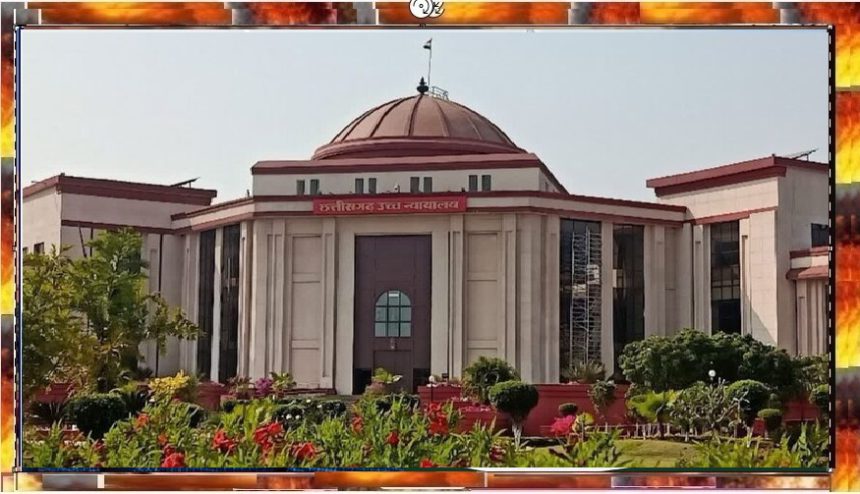
The Chhattisgarh High Court has refused to grant regular bail to retired IAS officer Jeevan Kishor Dhruv in the alleged Chhattisgarh Public Service Commission recruitment irregularities case. The court took a particularly serious view of allegations involving the leakage of competitive examination papers, observing that such an act can have consequences so widespread that it may be considered “more heinous than murder” because it can affect the careers and future prospects of lakhs of aspirants.
Justice Bibhu Datta Guru made the observations while hearing Dhruv’s bail plea in the case being investigated by the Central Bureau of Investigation. The court said allegations involving the compromise of an examination system cannot be viewed like an ordinary criminal offence, particularly when the examination is a gateway to government employment and thousands of candidates spend years preparing for it.
Who Is Jeevan Kishor Dhruv?
Jeevan Kishor Dhruv, 62, is a retired 2012-batch Indian Administrative Service officer of the Chhattisgarh cadre. At the time of the alleged irregularities connected with the 2020-2022 CGPSC recruitment process, he was serving as Secretary of the Chhattisgarh Public Service Commission.
His position within the Commission is central to the allegations because the Secretary is associated with the administration of the examination process and the handling of sensitive examination-related information. The CBI arrested Dhruv in September 2025 as part of its investigation into alleged irregularities surrounding the recruitment examinations.
The case has also drawn attention because Dhruv’s son, Sumit Dhruv, was selected as a Deputy Collector through the recruitment examination under investigation and is himself an accused in the case. Dhruv has denied the allegations and has argued that he was falsely implicated because of his position as CGPSC Secretary.
High Court Takes Serious View of Question Paper Leakage
While deciding the bail application, the High Court focused heavily on the wider consequences of alleged question paper leakage. The court observed that competitive examination aspirants invest years of their lives preparing for such tests, often making significant personal and financial sacrifices in the hope of securing government employment.
According to the court’s reasoning, compromising an examination does not affect only one candidate or one family. It can potentially undermine the aspirations of a very large number of candidates and damage public confidence in the recruitment system itself.
Justice Bibhu Datta Guru therefore stressed that the allegations against Dhruv had to be examined in the context of their potential impact on society. The court’s observation comparing the seriousness of paper leakage with murder was made to underline the broader damage that can allegedly result when the integrity of a competitive examination is compromised.
Court Finds Prima Facie Material Against Former IAS Officer
At the bail stage, the High Court noted that the prosecution had placed prima facie material suggesting that Dhruv may have misused his position as Secretary of the CGPSC. According to the CBI’s case, he allegedly had access to confidential question papers relating to the 2021 CGPSC Main Examination and subsequently supplied examination material to his son.
The court also took note of the prosecution’s claim that Sumit Dhruv had prepared four specific topics that later appeared in the examination. The agency has relied on this circumstance, along with other evidence, to support its allegation that confidential examination information was made available to him.
The High Court also considered witness statements, documentary material and recoveries made during the investigation. While these aspects remain subject to the criminal trial and final adjudication, the court found that the material placed before it was sufficient, at the present stage, to weigh against granting bail.
Examination Material Allegedly Recovered From Dhruv’s Residence
The CBI has alleged that searches carried out during the investigation resulted in the recovery of examination-related material from Dhruv’s residence. According to the prosecution, copies of questions and answers relating to General Studies Paper VII were recovered, along with a Question-cum-Answer Booklet connected with the Essay paper.
The agency has cited these alleged recoveries as part of the material supporting its case that confidential examination information was accessed and subsequently made available to Dhruv’s son. The prosecution has also relied on other evidence gathered during the investigation to establish the alleged conspiracy.
The court, however, was dealing only with the question of bail and not conducting a full trial on the allegations. The observations at this stage therefore concern the prima facie material available against the accused and do not amount to a final determination of guilt.
Why the Court Considered Dhruv’s Role Particularly Serious
One factor that weighed heavily against Dhruv was the specific role allegedly attributed to him. The prosecution’s case is not that he was an outsider attempting to obtain examination material, but that he occupied a position of responsibility within the very institution entrusted with conducting the recruitment examination.
The High Court noted the significance of the office he held and the responsibility attached to maintaining confidentiality and protecting the integrity of the examination process. If the allegations are ultimately established, the alleged misuse of that position would carry a different significance from an offence committed by an ordinary private individual.
The court consequently concluded that the gravity of the allegations, the alleged role attributed to Dhruv and the possible consequences for the recruitment system did not justify granting him bail at this stage.
Defence Claims Dhruv Was Falsely Implicated
Dhruv’s legal team strongly opposed the allegations and argued that he had been falsely implicated in the case. Advocate Devershi Thakur, appearing for the retired IAS officer, submitted that his client had essentially been targeted because he was serving as Secretary of the CGPSC when the alleged irregularities occurred.
The defence also pointed out that Dhruv was not named in the original First Information Report. His lawyers argued that investigators had not recovered any incriminating electronic device or document directly establishing that he had leaked question papers, apart from his mobile phone.
The defence further maintained that there was no direct evidence proving that Dhruv personally supplied confidential papers to his sons. According to the lawyers, the prosecution’s case relied heavily on circumstances that, in their view, were insufficient to establish his involvement.
Dhruv Allegedly Disclosed His Sons’ Candidature
Another important argument raised by the defence concerned Dhruv’s conduct after he came to know that both his sons were candidates in the examination.
His counsel told the court that Dhruv had informed the competent authorities about his sons’ candidature and had sought to be removed from confidential responsibilities connected with the recruitment process. The defence claimed that official records subsequently showed that he was not assigned confidential examination-related duties.
The lawyers also challenged the allegation that Dhruv had arranged preferential treatment for his sons. They pointed to the examination results, arguing that one of his sons failed to qualify while the other obtained a rank that was not among the highest positions.
The defence therefore submitted that the circumstances cited by the prosecution did not establish that Dhruv had manipulated or compromised the examination process.
CBI Strongly Opposes Bail
The Central Bureau of Investigation opposed the bail application and argued that the case involved serious irregularities capable of undermining the credibility of the entire public recruitment system. CBI counsel Vaibhav A. Goverdhan submitted that the alleged offences were particularly serious because they affected an examination in which a large number of candidates had participated.
According to the agency, Dhruv, along with the then CGPSC chairman, controller of examinations and other accused persons, allegedly entered into a criminal conspiracy concerning confidential question papers for the 2021 Main Examination. The prosecution’s case is that the alleged arrangement was intended to provide Dhruv’s son with an unfair advantage in the recruitment process.
The CBI maintained that the material recovered during the investigation, together with witness statements and other evidence, supported its allegations against the retired IAS officer.
Parity Argument Also Fails
Dhruv’s defence also sought bail on the principle of parity, pointing out that another accused person had previously received bail from the Supreme Court. The prosecution, however, argued that the comparison was not appropriate because the accused who received bail was a private individual.
The CBI emphasised that Dhruv occupied a fundamentally different position as a senior government officer entrusted with protecting confidential examination material. The agency argued that his alleged role therefore had to be assessed separately rather than simply compared with that of another accused.
The distinction was considered relevant while examining the seriousness of the allegations and the responsibilities attached to Dhruv’s former position.
Court Rejects Bail, Investigation and Trial to Continue
After considering the submissions from both sides, the Chhattisgarh High Court declined to exercise its discretion in Dhruv’s favour and rejected his regular bail application. The court’s observations reflect the seriousness with which it views allegations capable of undermining the credibility of a competitive public recruitment examination.
The case now continues through the criminal justice process, with the allegations against Dhruv and the other accused yet to be finally adjudicated. The evidence cited by the CBI will ultimately have to withstand scrutiny during the proceedings before any final conclusion regarding criminal liability can be reached.
For thousands of candidates who depend on competitive examinations for government careers, the case has once again brought the issue of examination integrity into sharp focus. The High Court’s remarks underline the enormous public consequences that can follow when confidential recruitment material is allegedly compromised, particularly in examinations where candidates compete after years of preparation and substantial personal effort.