

Chhattisgarh IAS Officer Rajat Bansal Strengthens Government Communication Strategy Under CM Vishnu Deo Sai
The Chhattisgarh government is placing renewed emphasis on digital communication, timely dissemination of information and greater public outreach as it seeks to strengthen awareness of its policies, welfare schemes and development initiatives.
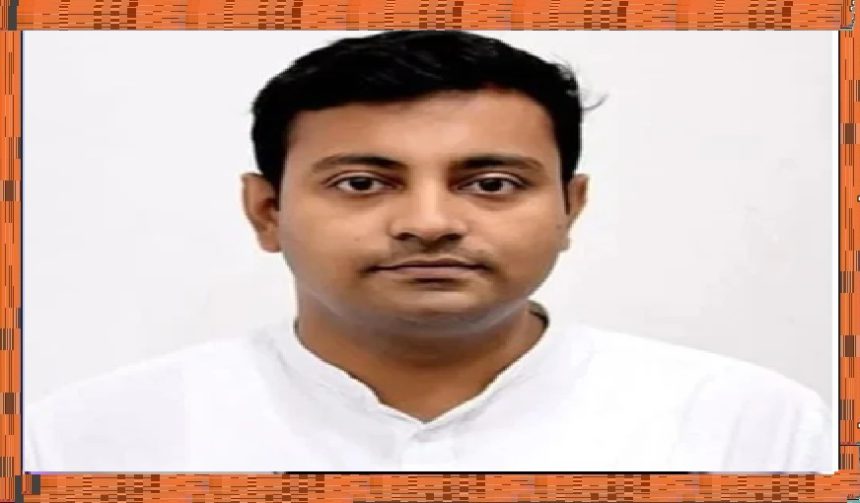
At the centre of this effort is IAS officer Rajat Bansal, who heads the state’s Public Relations Department and oversees key government communication functions under Chief Minister Vishnu Deo Sai.
A 2012-batch Indian Administrative Service (IAS) officer of the Chhattisgarh cadre, Bansal was assigned charge as Commissioner of Public Relations in March 2026, alongside his appointment as Special Secretary in the Chief Minister’s Secretariat. His responsibilities also include leadership of Samvad, the state government’s communication agency.
The Public Relations Department serves as an important link between the government, media organisations and the public. Its responsibilities include communicating official decisions, explaining welfare programmes, publicising development projects and ensuring that information about government initiatives reaches citizens across the state.
Rajat Bansal Emphasises New-Age Media Skills
At a meeting with officials of the Directorate of Public Relations and district public relations offices on April 24, 2026, Bansal called for greater proficiency in new-age media and the adoption of emerging communication technologies.
Held at the Samvad office in Nava Raipur, the meeting focused on the changing media landscape and the need for government communication machinery to adapt to evolving platforms and audience preferences.
With digital platforms playing an increasingly important role in how people access information, public relations officials need to develop the skills required to communicate effectively across different channels.
The emphasis is not merely on adopting new technologies, but also on ensuring that official information is delivered promptly and reaches the intended audience.
According to the state Public Relations Department, Bansal stressed that keeping pace with technological developments was essential for effective communication and public outreach.
He also underlined the importance of administrative accountability, making it clear that officials’ performance would be assessed on the basis of results. The department reported that he directed disciplinary action against officials in three districts over alleged negligence in publicity-related work.
The directions reflected two key priorities: strengthening digital communication capabilities and ensuring that officials discharge their responsibilities effectively.
Public Relations Department’s Role in Government Outreach
The Public Relations Department plays a significant role in explaining government policies and communicating administrative decisions to citizens. Through the Directorate of Public Relations, district-level offices and the state government’s communication agency, it helps disseminate information about welfare schemes, development projects and public services.
Its principal functions include:
Disseminating verified information about government decisions, policies and programmes.
Coordinating communication between state departments and district administrations.
Providing media organisations with official information and updates.
Using digital platforms to expand the reach of government communication.
Increasing public awareness of welfare schemes and government services.
Effective public communication requires more than the circulation of announcements. Information must be accurate, understandable and available when citizens need it.
This is particularly important for welfare programmes, where people may require clear guidance on eligibility, application procedures, benefits and the authorities responsible for implementation.
By strengthening digital capabilities and improving coordination between state and district offices, the department can seek to make government information more accessible to people in both urban and rural areas.
Rajat Bansal’s Administrative Experience
Before taking charge of the Public Relations Department, Bansal held several important administrative assignments in Chhattisgarh, gaining experience in urban governance, district administration and rural employment programmes.
His previous responsibilities included serving as Managing Director and Chief Executive Officer of Raipur Smart City and Commissioner of the Mahatma Gandhi National Rural Employment Guarantee Act (MGNREGA) in the state.
His career has also included assignments as Assistant Collector in Raigarh, Sub-Divisional Magistrate, Chief Executive Officer of district panchayats, Commissioner of Raipur Municipal Corporation and Collector in different districts of Chhattisgarh.
These positions involved a broad range of administrative responsibilities, including municipal services, rural development, employment programmes, district-level coordination and public service delivery.
In March 2026, the state government assigned him additional responsibilities alongside his public relations role. These included the position of Chief Executive Officer of Samvad and responsibilities associated with geology and mining and the Chhattisgarh State Mineral Development Corporation.
His experience across different branches of administration provides a background in government operations and the implementation of public programmes.
Educational Background of Rajat Bansal IAS
Bansal holds a Bachelor of Engineering degree in Computer Science from the Birla Institute of Technology and Science (BITS), Pilani. He is proficient in both Hindi and English, a useful qualification for an officer overseeing communication in a state where government outreach must address audiences with different linguistic and informational needs.
His technical educational background is also relevant to an administrative environment in which digital platforms and technology increasingly influence the delivery of public services and the dissemination of official information.
Communication and Accountability Under CM Vishnu Deo Sai
Under Chief Minister Vishnu Deo Sai, communicating the government’s policies, welfare initiatives and development agenda remains an important administrative function.
The Public Relations Department is responsible for ensuring that information about these initiatives reaches the public through official channels. Its district-level network helps extend communication beyond the state capital, while digital platforms offer additional ways to reach citizens quickly.
Bansal’s emphasis on new-age media skills reflects the need for government communication systems to keep pace with changing technology and public expectations. At the same time, his focus on performance-based accountability highlights the importance of ensuring that publicity-related responsibilities are carried out efficiently.
The department’s challenge is to combine technological innovation with accuracy, transparency and timely communication. Public trust depends not only on how quickly information is disseminated, but also on whether it is reliable, accessible and useful to citizens.
As Commissioner of Public Relations and head of Samvad, Bansal occupies a key position in the state’s communication framework. The effectiveness of the department’s efforts will depend on how well its officials adapt to new media platforms, coordinate with district administrations and communicate government programmes in a clear and responsible manner.
The broader objective is to ensure that official information reaches people effectively and that communication supports the implementation of public welfare programmes and development initiatives across Chhattisgarh.