

From Bureaucracy to the Boardroom: Former IAS Officer Upma Chawdhry Creates History as First Woman Chairperson of Metropolitan Stock Exchange
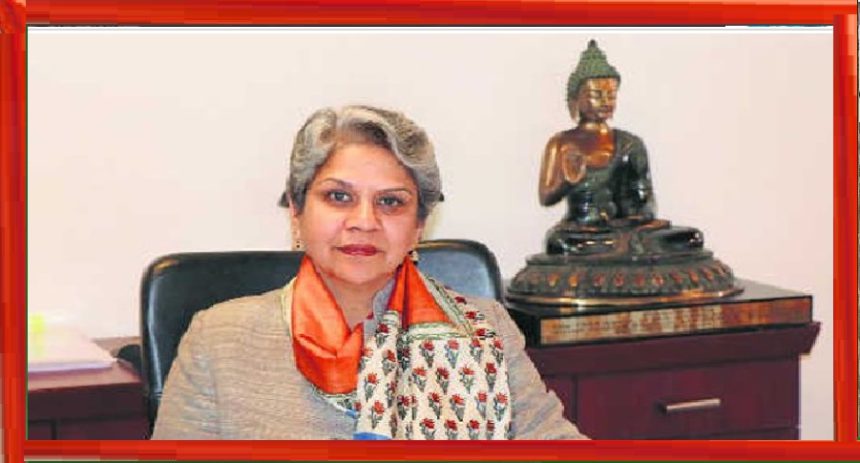
In a landmark development for India’s financial sector, retired IAS officer Upma Chawdhry has been appointed as the Chairperson of the Governing Board of the Metropolitan Stock Exchange (MSE). With this appointment, she has achieved a historic distinction — becoming the first woman ever to head a Market Infrastructure Institution (MII) in the country.
The appointment has received formal approval from the Securities and Exchange Board of India (SEBI), the nation’s capital market regulator. Industry observers see the move as more than just a leadership change. It reflects a growing recognition of the value that experienced public administrators can bring to financial institutions navigating increasingly complex regulatory and technological environments.
For Upma Chawdhry, the appointment marks yet another milestone in a distinguished career that has spanned governance, policy-making, institutional reform, international diplomacy, and public administration for well over three decades.
A Historic First for India’s Financial Markets
India’s financial ecosystem has witnessed significant transformation over the past two decades. Stock exchanges, depositories, clearing corporations, and other market infrastructure institutions have become increasingly sophisticated and technology-driven.
Yet despite these advances, leadership at the highest levels of such institutions has largely remained male-dominated.
That reality has now changed.
By taking charge as Chairperson of the Metropolitan Stock Exchange, Chawdhry has broken a long-standing barrier and opened a new chapter for women’s representation in financial market leadership.
Many experts believe the significance of her appointment extends beyond symbolism. It sends a strong message about the growing presence of women in strategic decision-making roles across sectors traditionally dominated by men, including finance, regulation, and corporate governance.
SEBI Gives Its Nod
The appointment received the approval of SEBI, which oversees the functioning of India’s securities markets and ensures that market institutions maintain high standards of governance and transparency.
SEBI’s endorsement is being viewed as a reflection of confidence in Chawdhry’s extensive administrative experience and her ability to guide an important market institution through a rapidly evolving financial landscape.
The Metropolitan Stock Exchange occupies a significant position within India’s capital market architecture. Established in 2008, the exchange provides platforms for trading across multiple asset classes, including equities, debt instruments, and currency derivatives.
As competition intensifies and investor expectations continue to rise, leadership capable of balancing innovation, regulation, and institutional stability becomes increasingly important.
A Career Built on Public Service
Upma Chawdhry belongs to the 1983 batch of the Indian Administrative Service and served in the Himachal Pradesh cadre.
Born in 1959, she dedicated more than 35 years to public service before retiring in December 2020.
Throughout her career, she held a wide range of senior administrative positions at both state and national levels. Her work touched numerous sectors that directly impact governance and economic development.
These included:
Finance and fiscal management
Rural development initiatives
Education policy and administration
Industrial development
Tourism promotion
Women’s empowerment programmes
Public sector reforms
Institutional modernization
Her reputation within the civil services was built on a combination of administrative rigor, policy expertise, and a strong focus on governance reforms.
Colleagues often regarded her as an officer capable of handling complex institutional challenges while maintaining a long-term developmental perspective.
First Woman Director of LBSNAA
One of the most notable chapters of her career came in 2016 when she was appointed Director of the Lal Bahadur Shastri National Academy of Administration (LBSNAA) in Mussoorie.
LBSNAA occupies a unique place in India’s governance framework. It serves as the country’s premier training institution for civil servants and is responsible for shaping future generations of administrators.
Chawdhry became the first woman ever to lead the academy.
Her tenure was widely noted for its emphasis on leadership development, administrative ethics, governance innovation, and capacity building among civil servants.
The role also showcased her ability to lead large and complex institutions, an experience that is expected to prove valuable in her new responsibilities at the Metropolitan Stock Exchange.
International Exposure and Global Recognition
Chawdhry’s influence has not been confined to India alone.
Over the years, she represented the country at several prestigious international forums and worked closely with global institutions focused on governance, development, and public administration.
She has participated in engagements linked to the World Trade Organisation (WTO) and collaborated with various United Nations agencies on governance-related initiatives.
Her international profile grew even stronger between 2018 and 2021 when she served as a Member of the United Nations Committee of Experts on Public Administration.
This committee plays a critical role in advising the UN on governance reforms and public sector effectiveness across member nations.
During the same period, she also chaired a working group associated with the United Nations Public Service Award, one of the most respected recognitions for excellence in public administration worldwide.
Such assignments provided her with exposure to global best practices in institutional management, accountability frameworks, and governance systems.
Expertise Beyond Government
Although best known for her civil service career, Chawdhry has also contributed extensively to institutional and corporate governance.
She has served on the boards of several respected organizations and companies, offering guidance on strategic planning, organizational reforms, compliance systems, and governance structures.
This experience bridges the gap between public administration and corporate oversight—an increasingly valuable skill set in today’s interconnected economic environment.
Financial market institutions require leaders who understand regulation, stakeholder management, transparency, risk governance, and organizational transformation.
Chawdhry’s background aligns closely with those requirements.
A Crucial Time for the Metropolitan Stock Exchange
Her appointment comes at a particularly important moment for India’s financial sector.
The country’s capital markets have witnessed unprecedented growth in retail participation. Millions of new investors have entered the market over the last few years, driven by digital platforms, improved financial literacy, and greater accessibility.
Technology is reshaping trading systems. Regulatory expectations are becoming more stringent. Cybersecurity concerns continue to evolve. Market participants are demanding greater transparency and efficiency.
Against this backdrop, the Metropolitan Stock Exchange is seeking to strengthen its position within India’s expanding capital market ecosystem.
Industry observers expect Chawdhry’s tenure to focus on several strategic priorities, including:
Strengthening governance frameworks
Enhancing transparency and accountability
Improving operational efficiency
Modernizing market infrastructure
Supporting innovation and technology adoption
Strengthening regulatory compliance mechanisms
Expanding investor confidence
Promoting broader financial inclusion
Her long administrative experience may help the exchange navigate these priorities while maintaining strong institutional discipline.
A Symbol of Changing Times
For many, Upma Chawdhry’s appointment represents more than a professional achievement.
It reflects changing attitudes toward leadership in India’s most influential institutions.
From becoming the first woman Director of LBSNAA to now becoming the first woman Chairperson of a Market Infrastructure Institution, her career has repeatedly challenged traditional boundaries.
Her journey demonstrates how expertise developed in public administration can successfully transition into leadership roles within financial and corporate institutions.
At a time when diversity, inclusion, and effective governance are increasingly recognized as essential components of institutional success, her appointment stands out as a powerful example of progress.
As she prepares to lead the Metropolitan Stock Exchange into its next phase, expectations are naturally high. Yet her extensive experience, national reputation, and global exposure suggest she is well-positioned to guide the institution through the opportunities and challenges that lie ahead.
For India’s financial markets, it is a historic moment. For women aspiring to leadership roles across sectors, it is an inspiring one.