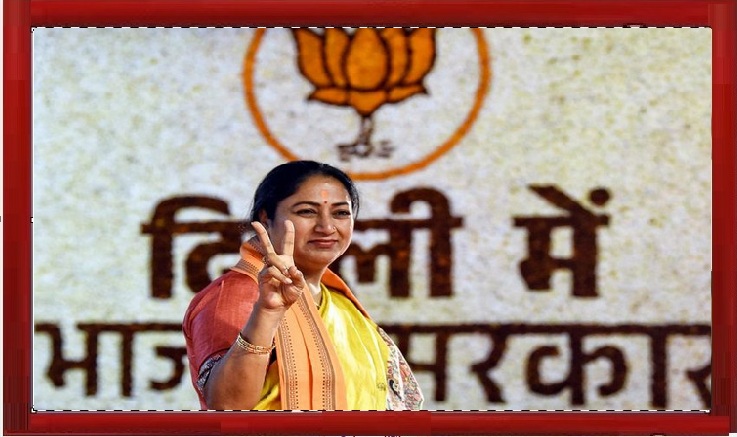
Delhi Bureaucracy Shakeup: Chief Minister Rekha Gupta Orders Massive 60-Officer Overhaul Targeting Health and Fire Services Amid Corruption and Safety Scrutiny
The Delhi government just pulled the trigger on one of the most aggressive administrative shakeups the capital has seen in years. In a sweeping, single-day exercise, the Services Department issued transfer orders for a staggering 60 officers, scattering high-ranking IAS and DANICS officials across entirely new portfolios, district headquarters, and ministerial desks.
This isn’t a routine bureaucratic game of musical chairs. The sheer scale and timing of the moves tell a much bigger story. Chief Minister Rekha Gupta’s administration is clearly reacting to two massive crises that have rocked the capital over the last few weeks – a explosive ₹350-crore medical procurement scam and a devastating, fatal fire that exposed severe lapses in urban safety regulation. By cleaning house, the newly established administration is dropping a heavy anchor, signaling that institutional accountability is no longer up for negotiation.
The Health Department Purge: Cleaning Out the CPA
If you want to know where the real fire was burning, look straight at the Health Department. It emerged as the ground zero of this entire reshuffle, with virtually every single secretary-level officer attached to the department handed marching orders.
The background here is incredibly messy. The capital has been reeling from an intense investigation into deep-seated financial irregularities within the Central Procurement Agency (CPA) – the body responsible for buying medicines and heavy equipment for Delhi’s massive network of government hospitals. Just last week, the Delhi government’s Anti-Corruption Branch (ACB) made a headline-grabbing arrest of a senior doctor linked to a massive ₹350-crore fraud involving ghost procurements and inflated medical equipment contracts.
To compound the drama, internal probes have also been launched against two other ultra-senior health officials. With Chief Minister Rekha Gupta recently demanding the immediate relocation of 39 specific personnel embedded across health institutions and Tihar prisons, this reshuffle acts as the heavy hammer.
Take a look at how the top deck was reshuffled to stop the bleeding:
Sanjeev Kumar, who was holding down the fort as Special Secretary (Health), has been stripped of his medical portfolio entirely and sent to the Trade and Taxes Department to serve as Special Commissioner.
Mekala Chaitanya Prasad, a sharp 2015-batch IAS officer who was serving as the District Magistrate for South West Delhi, has been pulled out of district administration and thrown into the fire as the new Special Secretary (Health) to restore order.
Yash Chaudhary, another crucial Special Secretary (Health), has been given an incredibly strategic, heavy-duty additional responsibility. He is taking direct charge of the controversy-ridden Central Procurement Agency. Crucially, the government has delegated the financial powers of a Head of Department (HoD) directly to Chaudhary, a move that effectively strips the Directorate General of Health Services (DGHS) of its long-standing financial control over the agency’s massive budget.
Slicing and Dicing the Ministerial Inner Circles
The administrative earthquake didn’t stop with department heads; it ripped right through the private secretariats of individual cabinet ministers. The political-bureaucratic bridge in Delhi just got a total alignment shift.
Vaibhav Rikhari, a 2013-batch DANICS officer who was operating in the ultra-sensitive role of Secretary to Health Minister Pankaj Kumar Singh, has been packed off to handle urban water logistics as the new Director of the Delhi Jal Board (DJB). Stepping into his highly stressful shoes is Mukesh Rajora, another 2013-batch DANICS officer who was previously grinding away as the Additional District Magistrate (HQ). Rajora will now have his hands full managing the personal office of Minister Singh, who wields a massive portfolio combination covering Health, Transport, and IT.
The shifting of chess pieces continued down the ministerial line. Vinay Kumar Jindal (DANICS: 2014), the personal Secretary to Law and Tourism Minister Kapil Mishra, has also been reassigned to the Delhi Jal Board as Director. He is being replaced by Ranjeet Kumar Singh (DANICS: 2014), a seasoned administrator who was previously navigating the chaotic waters of the Education Department as Joint Director.
Meanwhile, Rajesh Chaudhary (DANICS: 2013) transitions from his role as Joint Secretary in Urban Development to become the primary gatekeeper for Industries and Environment Minister Manjinder Singh Sirsa. Over at the Social Welfare Ministry, Ankur Mehsram (DANICS: 2014) leaves his post as ADM (Outer North) to take over as Secretary to Minister Ravinder Singh Indraj.
Top-Tier IAS Officers Saddle Up with Double Portfolios
In the midst of transferring 60 people, you run into a classic structural problem – a deficit of elite leadership to steer key operations. To patch up the gaps, the Rekha Gupta government is leaning heavily on a few trusted, ultra-senior IAS workhorses, piling on massive additional responsibilities to keep core infrastructure stable.
Bipul Pathak, a heavyweight 1992-batch IAS officer currently running the show as Additional Chief Secretary (Social Welfare) and ACS (SC/ST/OBC), is now doing triple duty. The government has handed him the additional charge of Additional Chief Secretary for the Women and Child Development Department, effectively centralizing the state’s entire social safety net under his watchful eye.
Similarly, 1994-batch veteran Navin Kumar Chaudhary, who already has his hands full as the Additional Chief Secretary of the critical Irrigation and Flood Control Department, will now walk across the hall to take simultaneous charge of the General Administration Department (GAD).
Chaudhary takes over GAD from his batchmate Pandurang Pole (IAS: 1994), who has been relieved of his general administration duties to become the new spearhead for the Land & Building Department. Pole isn’t getting a lighter workload either; the administration tacked on the dual responsibilities of Secretary-cum-Commissioner (Labour) and Secretary (Cooperation) to his daily itinerary.
Even the Chief Minister’s immediate inner circle is absorbing the shockwaves. Sandeep Kumar Singh, a 2011-batch IAS powerhouse currently serving as Secretary in the Chief Minister’s Office and Special Secretary (Finance), has been tasked with an intense cultural infrastructure project. He is taking on the additional role of Managing Director for the recently revived Shahjahanabad Redevelopment Corporation, a body trying to breathe modern structural life into the historical zones of Old Delhi.
Fire Services Gets Hit by the Safety Backlash
Outside of the health financial scandal, the most politically charged move of this entire exercise happened at the top of the Delhi Fire Services. The capital has been plagued by a horrific string of urban fire tragedies, but the absolute breaking point came earlier this month with the devastating Hauz Rani Bed & Breakfast fire.
The illegal establishment, operating 25 packed rooms and a restaurant without a fire no-objection certificate, turned into a complete death trap, claiming 21 innocent lives. The tragedy triggered immense public rage and exposed shocking civic apathy. It led to a brutal, high-level review where Lieutenant Governor Vinai Kumar Saxena openly slammed the fire department for completely failing to enforce basic safety norms.
The political fallout was swift. Neduchezhiyan, who had been sitting in the hot seat as Principal Director of Delhi Fire Services, was summarily relieved of his command.
To clean up the systemic rot, the government turned to Sachin Rana, a 2014-batch IAS officer known for executing tight turnarounds. Rana, who is already running the show as Special Secretary (Home), is being turned into an administrative megastructure. He will now simultaneously hold the reins as:
Principal Director, Delhi Fire Services
Special Secretary, Urban Development
Special Secretary, Home
By locking the Home, Urban Development, and Fire wings under a single officer’s control, the administration is clearly hoping to crush the classic bureaucratic finger-pointing that happens between agencies whenever a safety disaster hits the city.
Redrawing the District Lines
The structural overhaul extended all the way down to the local, boots-on-the-ground level of district administration. In a massive shakeup of geographic commands, several district magistrates and sub-divisional magistrates have been packed up and sent to entirely new territories.
Among the standout geographic moves, KK Lakshman (IAS: 2017) has been pulled from his post as the Old Delhi District Magistrate and ordered to pack his bags for the South West Delhi district, stepping directly into the vacuum left by Mekala Chaitanya Prasad’s sudden move to the Health Department. Meanwhile, Anmol Srivastava (IAS: 2018), who was running the intensely populated East Delhi district as DM, has been reassigned to help overhaul public transit logistics as the new Special Commissioner (Transport).
The Bottom Line: Accountability Over Comfort
When you look at the raw numbers – 17 elite IAS officers from the AGMUT cadre and 43 battle-tested DANICS officers uprooted in a single day – it becomes obvious that this isn’t just a standard bureaucratic reshuffle.
The Rekha Gupta government is trying to accomplish two massive things simultaneously. First, they are aggressively moving to disrupt entrenched, cozy relationships within departments like Health and Fire Services that have been plagued by structural corruption and regulatory blindness. Second, they are concentrating executive authority in the hands of high-performing, tech-oriented, and fiscally disciplined bureaucrats who can fast-track the state’s cleanup operations before the public’s patience completely runs out.
The orders are active with immediate effect, and the corridors of the Delhi Secretariat are already buzzing. Word from high-level insiders suggests that if the ongoing anti-corruption probes uncover even more rot in the coming days, this historic 60-officer shakeup might just be the opening salvo of a much larger administrative war.
Massive reshuffles like this are often necessary to break up stagnant, corrupt networks within public departments, but they also risk temporarily paralyzing day-to-day governance as 60 different leaders try to learn their new portfolios all at once. Do you think a sudden, sweeping purge is more effective than a gradual, department-by-department restructuring?