

Haryana Bureaucracy Cliffhanger: Nayab Singh Saini Govt Seeks Second Extension for Chief Secretary Anurag Rastogi as Senior IAS Peers Face Retirement Wall
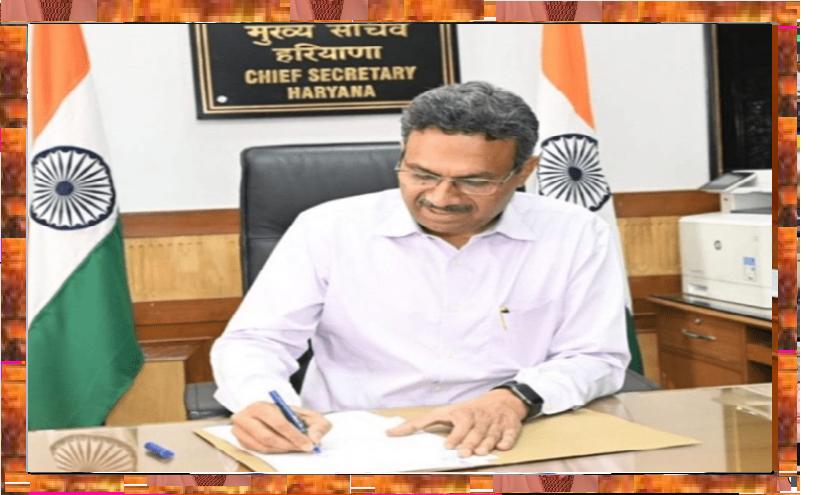
A high-stakes bureaucratic chess game is unfolding in Haryana, and the clock is ticking down to June 30. The Chief Minister Nayab Singh Saini-led government has officially reached out to the Central government with a bold proposal: they want to give the state’s top bureaucrat, Chief Secretary Anurag Rastogi, another full year in office.
If New Delhi gives this the green light, Rastogi – a veteran 1990-batch IAS officer – will see his tenure stretched all the way out to June 2027. On the surface, it looks like a simple vote of confidence in a steady hand. But look a little closer, and you realize this single administrative move acts like a massive dam, blocking a whole generation of senior IAS officers from ever reaching the absolute pinnacle of their careers. It is causing serious ripples through the state’s administrative circles, completely reshuffling the hierarchy, and locking out a handful of highly qualified contenders who are staring down their own retirement deadlines.
The Anchor of the Saini Administration
So, why is the Haryana government fighting so hard to keep Rastogi in the top seat? It mostly comes down to a classic political preference: continuity over chaos. Right now, Haryana is in the middle of executing a dense cluster of digital governance overhauls and welfare initiatives.
When you look at the specific reasons the state cited in its letter to the Centre, it reads like a checklist of the administration’s flagship projects. They want Rastogi at the helm to oversee the tricky rollout of the paperless registry system and the expansion of welfare schemes anchored to the Parivar Pehchan Patra (the state’s unique family ID system). Add to that a massive suite of e-governance reforms, the complex monitoring of major investment pipelines, and the execution of high-priority, Centrally-sponsored programs, and it becomes clear the government simply doesn’t want to swap horses mid-stream. To them, Rastogi represents absolute stability.
The Retirement Wall: Running Out the Clock for Senior Peers
While the political leadership craves stability, the mood among Haryana’s most senior bureaucrats is likely far more tense. If the Centre approves this fresh one-year extension, it essentially acts as a career dead-end for several top-tier 1990 and 1991-batch officers. Because Rastogi will occupy the Chief Secretary chair until June 2027, these contenders will reach their age of superannuation (forced retirement) without ever getting a shot at the state’s highest administrative post.
The math is brutal when you look at the retirement schedules of the officers waiting in the wings:
Raja Sekhar Vundru (1990 batch): Set to retire on July 31, 2026—just a month after Rastogi’s current term ends.
Sudhir Rajpal (1990 batch): Slated to exit on November 30, 2026.
Abhilaksh Likhi (1991 batch): Also hitting retirement on November 30, 2026.
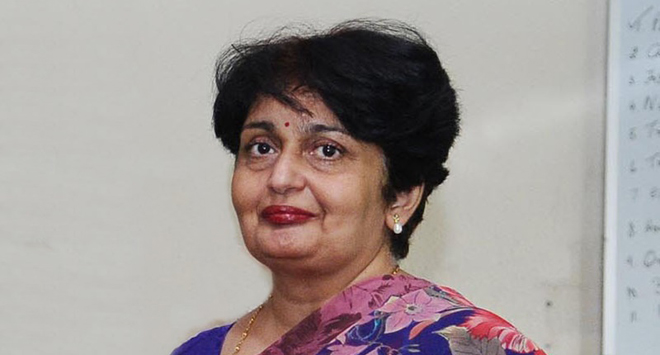
Sumita Misra (1990 batch): Hanging up her boots on January 31, 2027.
Arun Kumar Gupta (1992 batch): Reaching superannuation on September 30, 2026.
If the extension goes through, the window closes completely for an entire generation of administrative leadership.
A Career Born of Bizarre Circumstances
What makes Rastogi’s iron-clad grip on the Chief Secretary position so fascinating is how he got there in the first place. His path to the top was anything but conventional; it was shaped by a wild sequence of administrative flukes.
Back on October 31, 2024, Rastogi was tossed the keys to the Chief Secretary’s office on a purely interim basis. The designated top boss, Dr. Vivek Joshi, was stuck in New Delhi trying to untangle himself from a Central deputation and needed extra time to return to the state. That temporary gig was supposed to last just a few days.
But then, the bureaucratic landscape fractured. In February 2025, Dr. Vivek Joshi was unexpectedly appointed as the nation’s Election Commissioner, permanently removing him from the Haryana equation. Needing an immediate, permanent solution, the state government bypassed the traditional gradation list and appointed Rastogi as the full-fledged Chief Secretary.
The move turned heads because Rastogi was actually scheduled to retire just a few months later, on June 30, 2025. Instead of letting him retire, the government secured his first one-year extension, keeping him in power until June 30, 2026. Now, they are trying to repeat the exact same trick for a second time.
The Bad Blood of the 1990 Batch Seniority Dispute
You can’t really understand the tension surrounding Rastogi’s tenure without looking at the long-simmering seniority dispute within Haryana’s 1990 IAS batch. This has been a thorn in the side of the state’s bureaucracy for years.
Back in February 2024, a massive institutional debate kicked off when Anurag Rastogi, alongside his batchmates Ankur Gupta and Raja Sekhar Vundru, submitted an official representation demanding a thorough revision of the state’s cadre seniority list. Their argument was highly technical: they claimed that Sudhir Rajpal and Sumita Misra had initially belonged to other state cadres before being allocated to Haryana later on, meaning their positions at the top of the seniority ladder needed a serious second look.
The dispute got so intense that the Chief Secretary at the time, T.V.S.N. Prasad, had to step in and hold dramatic, personal hearings with all the feuding officers. No final, formal decision was ever handed down. Sumita Misra eventually came out to clarify things publicly, stating she was never a inter-cadre transfer but had simply been provisionally allotted to Haryana from day one – an allocation that was later set in stone.
When the government ultimately picked Rastogi for the top job, Rajpal and Misra were technically sitting above him on the official IAS gradation list. By choosing him anyway, the state government made it clear that political trust and administrative comfort mattered far more to them than rigid rules of seniority.
Who is Anurag Rastogi? The Profile of a Financial disciplinarian
So, who is the man at the center of this bureaucratic storm? Originally hailing from Moradabad in Uttar Pradesh, Rastogi officially entered the Indian Administrative Service on August 20, 1990.
He did his time in the trenches of field administration, getting his first big break in August 1992 as the Sub-Divisional Officer (Civil) in Narnaul. From there, he built up serious grassroots experience by serving as the Deputy Commissioner for three incredibly vital districts: Hisar, Panipat, and the corporate powerhouse of Gurugram (where he pull double duty as the Chief Administrator of the famous Shri Mata Sheetla Devi Shrine Board).
As his career moved out of the fields and into the high-level halls of Chandigarh, Rastogi began carving out a niche as a financial heavyweight. He ran the Excise and Taxation Department as Commissioner from 2009 to 2012, navigated the high-stakes world of urban development as the Director General of Town and Country Planning from 2012 to 2015, and spent years anchoring the state as the Principal Secretary of Finance and Planning. By the time he was promoted to Additional Chief Secretary in 2021, he had built a iron-clad reputation as a deeply disciplined administrator with an encyclopedic knowledge of fiscal management.
Unlike some high-profile bureaucrats who love hunting for headlines or chasing grand, flashy legacy projects, Rastogi has spent his 36-year career operating with a low-key, hyper-consistent working style. He focuses heavily on administrative efficiency and financial prudence, which has allowed him to build immense rapport with successive political leaders across party lines.
Precedents and the Looming Decision
While granting a second extension to a Chief Secretary might seem like an extraordinary measure, Haryana officials are quick to point out that it isn’t entirely unprecedented in Indian governance. When pitching their case to the Centre, the state administration is reportedly leaning on historical precedents – like the famous case of Uttar Pradesh Chief Secretary Dina Nath Mishra, who managed to secure three consecutive extensions during his time in office.
The ball is now entirely in the Central Government’s court. With Rastogi’s current extension officially expiring at midnight on June 30, the Department of Personnel and Training (DoPT) and the Prime Minister’s Office will have to make a definitive call within days.
If New Delhi says yes, Rastogi caps off an astonishing 36 years of service by cementing his legacy as one of the most resilient and influential bureaucrats in Haryana’s modern history. If they say no, the state secretariat will plunge into a chaotic, last-minute scramble to pick a successor from a pool of eager contenders who have been waiting in the shadows for their turn at the top.
When a government repeatedly bypasses seniority lists to keep a trusted bureaucrat via multiple extensions, it always sparks an institutional debate. Do you think the value of “governance continuity” outweighs the demoralizing effect it can have on other senior officers who lose their shot at the top post?