

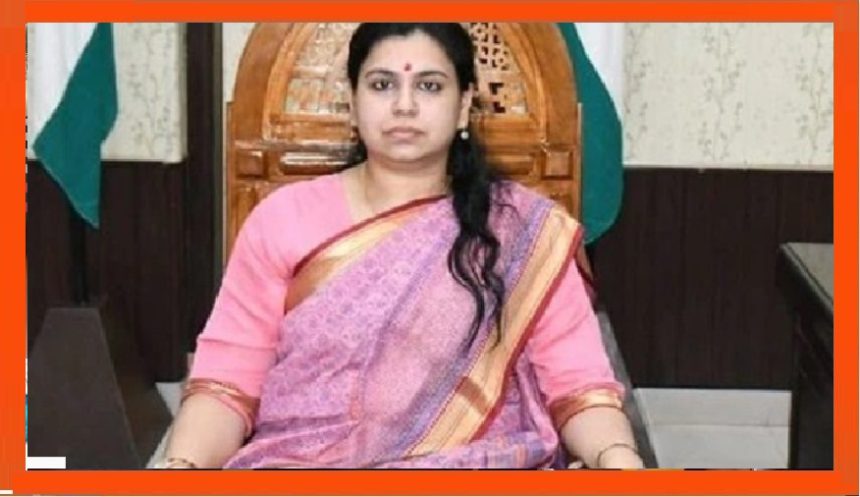
A deeply reflective and emotionally powerful social media post by senior IAS officer Divya Mittal has gone viral across social media platforms, triggering an intense nationwide conversation on the limitations of India’s education system and the emotional struggles faced by high achievers.
The Uttar Pradesh cadre IAS officer, who studied at Indian Institute of Technology Delhi and later completed her management education from Indian Institute of Management Bangalore before joining the Indian Administrative Service, said that while the country’s premier institutions trained her to achieve academic and professional success, they failed to prepare her for emotional resilience, loneliness, self-awareness, and happiness.
Her candid remarks, shared on X and Facebook, resonated strongly with students, professionals, corporate employees, and civil service aspirants, many of whom described her observations as painfully relatable in today’s fast-paced and achievement-driven society.
In the widely shared post, Mittal wrote:
“IIT Delhi to IIM Bangalore to IAS. I got the best education my country had to offer. It taught me how to crack tough exams and manage big responsibilities. But it never taught me how to quiet my own mind or handle loneliness. We spend many years learning how to achieve, but not a single day learning how to be happy.”
The post quickly gained traction online, with thousands praising the officer for openly addressing subjects that are often ignored in formal education systems despite affecting millions of people.
Emotional Intelligence Missing from Classrooms
In her reflections, Divya Mittal highlighted several critical life skills that she believes schools and universities rarely teach adequately.
She pointed out that while students spend years memorizing scientific formulas and academic concepts, they are seldom taught how to process grief, rejection, heartbreak, disappointment, or emotional pain.
“We memorized the periodic table, but no one explained the chemistry of a broken heart,” she remarked, emphasizing that emotional regulation is one of the most essential yet neglected aspects of modern education.
According to her, many people grow up learning how to suppress emotions rather than understand and process them in a healthy manner.
Importance of Communication and Boundaries
Mittal also stressed the importance of deep communication skills. While schools train students to write essays, give presentations, and perform academically, they often fail to teach how to express vulnerability, communicate boundaries, or confidently say “no.”
She explained that such skills become crucial later in life while dealing with workplace pressure, toxic environments, unhealthy relationships, and personal stress.
Real Life Rewards Questions, Not Memorized Answers
Another major issue highlighted by the IAS officer was the lack of critical thinking in conventional education systems.
According to Mittal, academic success frequently rewards memorization and standardized answers, whereas real life values curiosity, independent thinking, and the courage to question accepted beliefs.
She warned that many adults confidently repeat opinions and social narratives without ever examining where those ideas originated.
Financial Literacy and Self-Discipline
Mittal further noted that although students solve complex mathematical equations throughout their academic journey, they rarely receive practical lessons on budgeting, debt management, savings, investments, or financial independence.
She described financial literacy as an essential survival skill that directly affects freedom, stress levels, and long-term stability.
Discussing discipline, she observed that schools function through externally imposed schedules and deadlines, but adulthood demands internal motivation and personal accountability.
“Discipline is simply the habit of keeping promises to yourself,” she wrote.
Loneliness, Mental Health and Self-Discovery
The IAS officer also reflected on the emotional isolation many adults experience after leaving structured academic environments filled with peers and constant interaction.
She emphasized that people should learn how to feel comfortable with themselves and understand that solitude is not necessarily loneliness.
Mittal further highlighted the absence of mental health education in schools. While physical education classes exist in almost every institution, structured learning around burnout, anxiety, emotional exhaustion, stress management, and seeking psychological help remains largely absent.
Perhaps the most profound point in her post related to self-awareness and identity.
“We spend years trying to be the ‘best’ student, only to realize we don’t know who we are without a gold medal,” she wrote.
According to Mittal, the true purpose of education should not merely be producing successful professionals, but helping individuals discover what genuinely matters to them before society defines success on their behalf.
Who Is Divya Mittal?
Born on November 23, 1983, Divya Mittal is widely regarded as one of the academically accomplished officers in the civil services.
She completed her B.Tech from Indian Institute of Technology Delhi and earned a Post Graduate Diploma in Management from Indian Institute of Management Bangalore before entering the civil services.
Over the years, she has served in several important administrative roles, including District Magistrate and Collector of Deoria, Chief Development Officer, Joint Magistrate, Vice Chairman, Joint Managing Director, and Assistant Secretary.
She has also received prestigious recognitions such as the Ashok Bambawale Memorial Award for Outstanding IAS Officer Trainee and the Summer Undergraduate Research Award.
Following recent administrative reshuffles in Uttar Pradesh, she is currently serving as Special Secretary in the Revenue Department.