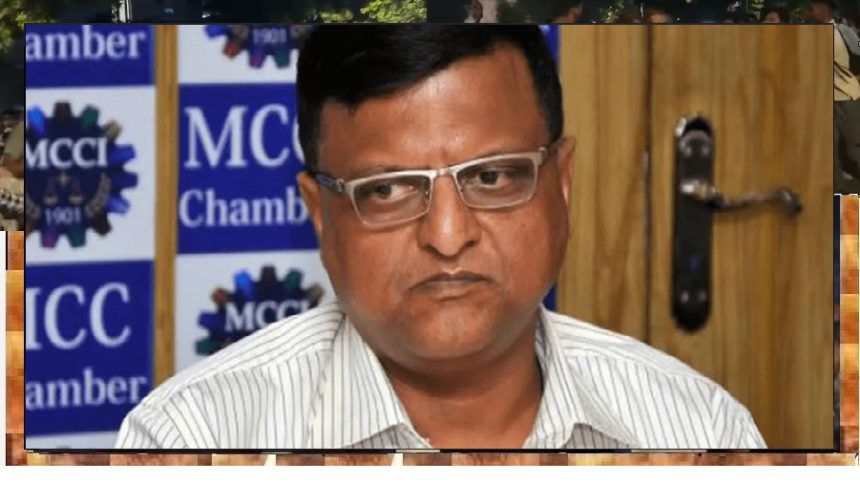
Who Is IAS Manoj Kumar Agarwal? IIT Kanpur Graduate Gets Six-Month Extension as West Bengal Chief Secretary; Know His Career, Key Roles and Administrative Journey
Who is IAS Manoj Kumar Agarwal? Know the complete profile of the 1990-batch West Bengal cadre IAS officer, IIT Kanpur graduate, his six-month extension as West Bengal Chief Secretary, career journey, key postings, education, Central deputation, and major administrative responsibilities.
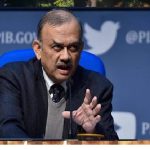
The Central Government has approved a six-month extension in service for West Bengal Chief Secretary Manoj Kumar Agarwal (IAS:1990 Bengal), ensuring that one of the state’s most experienced bureaucrats continues to head the administration until January 31, 2027. The decision comes at a crucial time when the West Bengal government is implementing several important governance initiatives, welfare programmes and administrative reforms that require continuity at the highest level of the bureaucracy.
The extension was approved by the Department of Personnel and Training (DoPT) after the West Bengal Government formally requested that Agarwal be allowed to continue beyond his scheduled retirement. Originally set to retire on July 31, 2026, the senior IAS officer will now remain in office for another six months, from August 1, 2026, to January 31, 2027.
While service extensions for Chief Secretaries are granted only in select circumstances, officials believe this decision has been taken to ensure administrative stability during an important phase for the state government. With multiple flagship schemes, policy initiatives and inter-departmental projects currently underway, the continuation of an experienced officer at the helm is expected to help maintain smooth governance.
Centre Approves Extension After State’s Recommendation
The proposal for extending Manoj Kumar Agarwal’s tenure was submitted by the West Bengal Government on July 15, 2026. After examining the request, the Department of Personnel and Training approved the recommendation, allowing the state’s top bureaucrat to continue beyond his retirement date.
According to officials, the extension has been granted keeping in mind the need for continuity in administration. The Chief Secretary is responsible for coordinating government departments, monitoring implementation of key policies, resolving inter-departmental issues and serving as the principal administrative adviser to the state government.
His continuation is expected to ensure that ongoing governance initiatives remain on track without disruption caused by a leadership transition.
Who Is IAS Manoj Kumar Agarwal?
Manoj Kumar Agarwal belongs to the 1990 batch of the Indian Administrative Service and serves in the West Bengal cadre.
Born on July 8, 1966, he hails from Uttar Pradesh and has built a distinguished administrative career spanning more than three and a half decades. Over the years, he has served in district administration, the West Bengal Secretariat, the Government of India and constitutional institutions, earning a reputation as a seasoned administrator capable of handling diverse and challenging assignments.
Throughout his long career, he has reportedly held nearly 27 significant postings, covering governance, public administration, disaster management, food security, forests, elections, personnel administration and urban development.
Strong Academic Foundation at IIT Kanpur
Before entering the civil services, Agarwal built an impressive academic profile.
He completed his schooling at the prestigious La Martiniere College, Lucknow, one of India’s oldest educational institutions known for producing several distinguished public figures.
He later pursued Mechanical Engineering at the Indian Institute of Technology (IIT), Kanpur, earning a Bachelor of Technology (B.Tech.) degree. His engineering education has often been cited as one of the factors that contributed to his analytical and systematic approach to administration.
Like many IIT graduates who later joined the civil services, Agarwal combined technical knowledge with administrative leadership throughout his career.
Beginning an Administrative Journey That Spanned Decades
After joining the IAS, Agarwal began his administrative career in West Bengal with field assignments that gave him extensive exposure to grassroots governance.
His early postings included serving as Additional District Magistrate in the then Burdwan district. Those formative years helped him understand district administration, revenue management, law and order, rural development and implementation of government programmes at the field level.
He later went on to serve as District Magistrate of North Dinajpur between 1999 and 2001, followed by his appointment as District Magistrate of Bardhaman from 2001 to 2003.
These assignments strengthened his administrative credentials and prepared him for more senior responsibilities in the state government.
Key Leadership Roles in the West Bengal Government
As his career progressed, Manoj Kumar Agarwal handled several of the most important departments in the West Bengal Government.
Among his notable assignments were:
Principal Secretary, Personnel and Administrative Reforms
Principal Secretary, Food and Supplies Department
Principal Secretary, Fire and Emergency Services
Additional Chief Secretary, Forest Department
Additional Chief Secretary, Disaster Management and Civil Defence Department
Each of these departments required a different style of governance, ranging from administrative reforms and public distribution systems to disaster preparedness, forest conservation and emergency response.
Over the years, his experience across multiple sectors made him one of the state’s most versatile senior bureaucrats.
He also served as President of the West Bengal State IAS Association, reflecting the confidence reposed in him by fellow officers.
Valuable Experience on Central Deputation
Apart from his assignments in West Bengal, Agarwal also served on Central deputation in New Delhi.
One of his notable roles was serving as Personal Secretary to former Union Minister Priya Ranjan Dasmunsi.
He also worked in different capacities at the Delhi Development Authority (DDA), where he gained valuable exposure to urban planning, infrastructure management and policy implementation at the national level.
These assignments broadened his administrative perspective by combining state-level governance with Central Government policymaking.
A High-Profile Role as Chief Electoral Officer
In March 2025, Manoj Kumar Agarwal was appointed Chief Electoral Officer (CEO) of West Bengal, one of the most closely watched constitutional positions in the state.
His appointment came after the Election Commission reportedly sought a revised panel of officers, preferring someone who would remain in service beyond the scheduled 2026 Assembly elections.
As Chief Electoral Officer, he was responsible for supervising the politically significant Special Intensive Revision (SIR) of electoral rolls, a process that attracted nationwide attention due to its implications for electoral preparedness.
The assignment placed him at the centre of one of the country’s most sensitive administrative exercises.
Political Controversies During His CEO Tenure
Like many senior election officials handling politically charged assignments, Agarwal’s tenure as Chief Electoral Officer witnessed controversy.
The Trinamool Congress (TMC), led by former Chief Minister Mamata Banerjee, alleged bias during the electoral roll revision process and reportedly submitted complaints before the Election Commission questioning his conduct.
His tenure also brought renewed public attention to a CBI disproportionate assets case registered in 2013, in which the agency alleged that Agarwal and his wife possessed assets disproportionate to their known sources of income.
The legal developments in the matter are significant.
A Delhi court acquitted him in 2018, providing relief after the trial. Subsequently, the CBI challenged the acquittal before the Delhi High Court, where the matter is stated to be pending.
Despite the political criticism and legal proceedings, Agarwal has continued to hold several important administrative assignments and remains regarded in bureaucratic circles as an experienced civil servant with extensive governance expertise.
Appointment as West Bengal Chief Secretary
Following the formation of the new government in West Bengal, Manoj Kumar Agarwal was appointed Chief Secretary on May 11, 2026.
He succeeded Dushyant Nariala, who was shifted to New Delhi as the Principal Resident Commissioner.
Before assuming the state’s highest bureaucratic office, Agarwal had been serving as Chief Electoral Officer and ex-officio Additional Chief Secretary, Home and Hill Affairs Department.
His appointment as Chief Secretary was viewed as an effort to place an experienced administrator in charge during a period requiring strong coordination across departments.
Why the Extension Is Important
Officials believe the six-month extension will help maintain continuity while several major programmes continue to be implemented across the state.
As Chief Secretary, Agarwal is currently responsible for coordinating:
Inter-departmental administrative initiatives
Governance and policy reforms
Implementation of flagship welfare schemes
Coordination among senior bureaucrats and government departments
Monitoring execution of priority development programmes
Replacing the state’s top bureaucrat during such an important period could have affected administrative momentum. The extension is therefore expected to ensure continuity while ongoing projects move forward without interruption.
A Career Defined by Experience and Administrative Depth
With an IIT education, extensive district-level experience, multiple senior secretariat assignments, Central deputation, election management responsibilities and leadership across several major departments, Manoj Kumar Agarwal has built one of the most diverse administrative careers in the West Bengal cadre.
His professional journey reflects experience in governance, disaster management, food security, personnel administration, urban development, forests, election management and public policy. Those varied assignments have prepared him for handling the responsibilities that come with serving as the state’s senior-most civil servant.
Now, with the Centre approving his continuation until January 31, 2027, Agarwal is expected to provide stability and experienced leadership as West Bengal advances its governance agenda, oversees major welfare programmes and continues implementing administrative reforms during the coming months.