

MHA Yet to Announce IPS 2025 Cadre Allocation as UPSC 2026 Cycle Begins, Raising Questions Among Aspirants
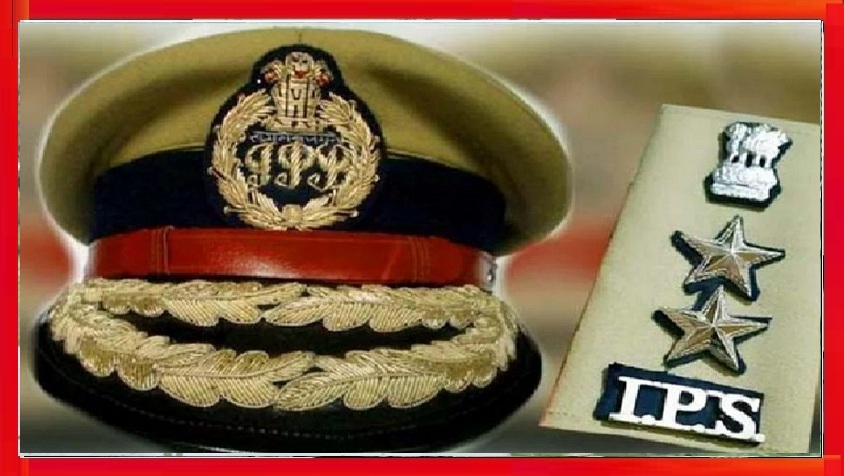
As the application process for the UPSC Civil Services Examination 2026 is set to begin on May 24, an important administrative process linked to the previous examination cycle remains incomplete — the cadre allocation for Indian Police Service (IPS) officers selected through the Civil Services Examination (CSE) 2025.
While candidates selected for the Indian Administrative Service (IAS) and Indian Forest Service (IFS) received their cadre allocations in December 2025, IPS officers from the same examination cycle are still awaiting official notification from the Ministry of Home Affairs (MHA).
The continued delay, despite several months having passed since the declaration of final results, has triggered growing concern and speculation among aspirants, selected candidates and serving officers. As of now, the Ministry has not issued any formal clarification regarding the reasons behind the pending allocation process.
Why IPS Cadre Allocation Is Important
Cadre allocation is one of the most significant milestones in the career of a civil servant. It determines the state or joint cadre where an officer will undergo training and spend a substantial part of their professional career.
For IPS officers in particular, cadre allocation shapes field exposure, policing experience, administrative responsibilities and long-term career progression. It also determines whether an officer will serve in a home-state or outsider cadre under the existing allocation system.
Given the importance of the process, the absence of cadre allocation for the IPS 2025 batch has become increasingly noticeable, especially as preparations begin for the next UPSC recruitment cycle.
Speculation Around New Cadre Allocation Policy
Initially, some observers linked the delay to the Centre’s recently approved cadre allocation policy for All India Services.
Reports in January 2026 indicated that the government had introduced a revised framework for cadre allocation for IAS, IPS and Indian Forest Service (IFoS) officers. The new policy reportedly replaces the earlier five-zone system with four groups and introduces a revised vacancy determination mechanism based on cadre gaps as on January 1 of the year following the examination.
Under the revised policy framework:
State governments are required to submit vacancy requirements by January 31.
Cadre-controlling authorities are expected to finalise allocations after assessing cadre gaps.
Reservation rosters and insider-outsider balance are to be considered during allocation.
However, the policy also contains an important clarification: it will apply only to the Civil Services Examination 2026 and IFoS Examination 2026 onward.
This means the IPS officers selected through CSE 2025 should still be governed by the earlier cadre allocation system, indicating that the present delay may not be connected to the newly introduced framework.
Administrative Bottlenecks Seen as Likely Cause
With the new policy not applicable to the current batch, many observers believe the delay may instead be linked to administrative bottlenecks within the existing allocation mechanism.
Though no official explanation has been issued, the pending process has raised the possibility of delays in vacancy reconciliation, coordination with state governments, roster preparation or internal processing within the Ministry of Home Affairs.
Officials familiar with cadre management procedures note that IPS cadre allocation involves multiple stages of consultation and verification before final approval is issued.
Similar Delays Have Occurred Earlier
The current situation, while unusual, is not entirely unprecedented.
Public records available on the MHA’s IPS cadre allocation portal indicate that previous IPS batches have also experienced delays, revisions and re-allocations in the past.
One frequently cited example is the 2015 IPS batch, whose cadre allocation was reportedly issued only in late December 2016 after a prolonged delay that had similarly triggered uncertainty among candidates.
The precedent suggests that the present delay may reflect recurring administrative challenges rather than any extraordinary institutional crisis.
May 7 MHA Circular Added to Discussions
The debate around the delayed cadre allocation intensified further after a circular issued on May 7, 2026, by the IPS ACR Cell under the Ministry of Home Affairs.
The circular announced an extension in timelines for recording Performance Appraisal Reports (PAR) for the year 2025–26. Following instructions from the Department of Personnel and Training (DoPT), deadlines for self-appraisal and related reporting processes were extended by one month.
Under the revised schedule:
Self-appraisal deadlines were shifted from May 31 to June 30.
Reporting and reviewing timelines were correspondingly extended.
Although the circular pertains only to serving officers and is unrelated to cadre allocation, it has nevertheless fueled broader discussions about whether increased administrative workload and procedural backlogs may be affecting multiple processes within the IPS management system.
However, no official evidence currently links the PAR extension directly with the delay in cadre allocation.
MHA Yet to Respond to Queries
According to reports, attempts were made by India Today.in to obtain clarification from officials in the Ministry of Home Affairs regarding the delay.
Queries were reportedly directed to Sanjeev Kumar, who handles IPS-II, IPS-III and IPS-IV matters in the Police-I Division. However, his office reportedly stated that he remained occupied in official meetings.
Questions were also emailed to Rakesh Kumar Singh seeking details regarding the reasons for the delay, possible legal or administrative issues involved, and the expected timeline for completion of cadre allocation for the IPS 2025 batch.
As of publication, no official response had been issued by the Ministry.
Uncertainty Continues for IPS 2025 Batch
For candidates selected into the IPS through CSE 2025, the continued absence of cadre allocation has created uncertainty at a crucial stage of their transition into service.
Cadre allocation affects training arrangements, future postings, field exposure and long-term professional planning. As the UPSC 2026 examination cycle begins, many aspirants and selected officers are now closely watching the Ministry of Home Affairs for clarity on when the long-awaited IPS 2025 cadre list will finally be released.