

Rajasthan Chief Secretary V Srinivas Orders Daily Monitoring of High-Risk Pregnancies, Tightens Hospital Protocols to Reduce Maternal Mortality
In a determined effort to further strengthen maternal healthcare and bring down maternal mortality across Rajasthan, Chief Secretary V. Srinivas (IAS:1989:RJ) has directed the state’s Health Department to adopt a more proactive and accountable approach towards managing high-risk pregnancies. Stressing that every maternal death is preventable through timely intervention, the senior bureaucrat has ordered daily monitoring of all high-risk pregnant women, stricter compliance with hospital protocols and comprehensive audits of every maternal death reported in the state.
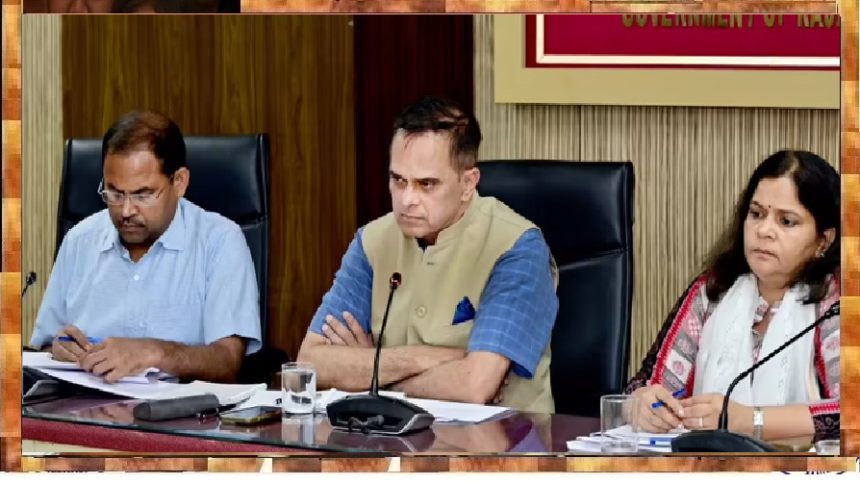
The directions were issued during a high-level video conference attended by senior health officials from across Rajasthan. The review focused on identifying gaps in maternal healthcare delivery, improving emergency response systems and ensuring that every pregnant woman receives appropriate medical attention based on the level of risk associated with her pregnancy.
The meeting forms part of the state’s broader strategy to improve maternal and child health outcomes by strengthening frontline healthcare systems, enhancing institutional accountability and ensuring timely medical intervention for vulnerable mothers.
Chief Secretary Stresses Continuous Monitoring of High-Risk Pregnancies
Addressing senior health officials, Chief Secretary V. Srinivas emphasised that women identified as having high-risk pregnancies require close and uninterrupted medical supervision throughout their pregnancy.
He directed the Health Department to ensure that every high-risk pregnant woman is linked to an appropriate healthcare institution capable of managing her medical condition.
Depending on the complexity of each case, women should receive treatment and monitoring through suitable healthcare facilities such as:
Community Health Centres (CHCs)
Sub-District Hospitals
District Hospitals
Government Medical Colleges
According to Srinivas, timely referral to the appropriate level of healthcare is essential for preventing avoidable complications during pregnancy and childbirth.
He stressed that every high-risk case must be tracked carefully until safe delivery and postnatal recovery.
Dedicated ANMs to Monitor Every High-Risk Pregnancy
One of the most significant decisions taken during the meeting was the introduction of dedicated monitoring for every identified high-risk pregnancy.
The Chief Secretary directed that each high-risk pregnant woman should be assigned to a designated Auxiliary Nurse Midwife (ANM).
The ANM will be responsible for:
Conducting daily follow-up of the pregnant woman’s health.
Monitoring any emerging medical complications.
Maintaining regular communication with healthcare facilities.
Ensuring timely consultations with doctors whenever necessary.
Facilitating immediate referral in case of emergencies.
Officials believe this dedicated monitoring mechanism will enable early detection of complications and significantly improve maternal health outcomes.
The move also strengthens accountability at the grassroots level by assigning specific responsibility for monitoring each vulnerable pregnancy.
Hospitals Asked to Follow Labour Room and OT Protocols Rigorously
While reviewing maternal healthcare services, V. Srinivas also focused on improving standards within government hospitals.
He instructed all healthcare institutions to strictly comply with prescribed medical protocols in:
Labour Rooms
Operation Theatres (OTs)
The Chief Secretary emphasised that standard operating procedures should be followed every single day without exception.
Strict adherence to clinical protocols, he observed, is critical for ensuring safe deliveries, reducing complications and improving emergency obstetric care across government hospitals.
He called upon hospital administrators to regularly supervise compliance and immediately address any deficiencies affecting patient care.
Every Maternal Death to Undergo Detailed Investigation
A major emphasis of the review meeting was strengthening the state’s maternal death review mechanism.
The Chief Secretary directed that every maternal death must be investigated comprehensively at both:
Institutional level
Community level
Rather than treating maternal deaths merely as statistical events, Srinivas stressed that every case should become an opportunity to identify systemic gaps and strengthen healthcare delivery.
Detailed investigations are expected to examine:
Clinical management of the patient.
Timeliness of referrals.
Availability of medical facilities.
Institutional preparedness.
Community-level healthcare access.
Delays in diagnosis or treatment.
Officials were instructed to ensure that lessons emerging from each review are incorporated into future healthcare planning.
Maternal Mortality Audit Committees to Be Strengthened
To improve the quality of maternal death investigations, the Chief Secretary ordered the strengthening of Maternal Mortality Audit Committees across the state.
He directed that these committees should include experts from multiple medical disciplines instead of relying on a limited group of officials.
The multidisciplinary approach is expected to provide a more comprehensive understanding of each case and facilitate better corrective measures.
The committees have also been instructed to conduct weekly review meetings so that findings can be analysed promptly and recommendations implemented without delay.
According to officials, regular audits will help identify recurring issues while improving accountability within the healthcare system.
Preventive Healthcare to Receive Greater Attention
Beyond emergency medical care, the Chief Secretary highlighted the importance of preventive interventions aimed at reducing pregnancy-related complications.
He called for stronger public awareness campaigns focusing on:
Regular antenatal check-ups.
Birth spacing and family planning.
Prevention, detection and treatment of anaemia.
Continuous monitoring of women with previous pregnancy complications.
According to Srinivas, many maternal health risks can be minimised through early identification, timely counselling and regular medical supervision.
He urged health officials to strengthen community outreach programmes so that women receive proper guidance from the early stages of pregnancy.
Hospitals Directed to Submit Daily Performance Reports
Seeking greater institutional accountability, the Chief Secretary introduced a system of daily reporting by government hospitals.
Healthcare institutions have been instructed to submit detailed reports covering several operational indicators, including:
Functional status of labour rooms.
Operational status of operation theatres.
Availability of Intensive Care Unit (ICU) beds.
Total number of patients treated.
Overall bed occupancy.
Number of normal deliveries.
Number of Caesarean deliveries.
Status of admitted pregnant women.
Other critical healthcare indicators.
The daily reporting mechanism is expected to provide the Health Department with real-time information regarding hospital functioning while enabling quicker administrative intervention whenever shortcomings are identified.
‘No Mother Should Lose Her Life Due to Negligence’
During the review meeting, V. Srinivas reiterated that no woman should lose her life because of preventable medical negligence or delays in treatment.
He stressed the importance of continuous monitoring of healthcare facilities, prompt medical response and effective coordination among doctors, nurses and frontline health workers.
According to the Chief Secretary, every level of the healthcare system must function with a sense of urgency whenever high-risk pregnancies are involved.
He urged officials to strengthen supervision while ensuring that hospitals remain adequately prepared to manage obstetric emergencies.
Medical Infrastructure Reviewed Across Rajasthan
The Chief Secretary also undertook a comprehensive review of maternal healthcare facilities available in major government institutions across Rajasthan.
The assessment covered several important medical establishments, including:
Medical College, Bikaner
Medical College, Jodhpur
Medical College, Kota
Medical College, Ajmer
Women’s Hospitals in Jaipur
Women’s Hospital, Kota
Officials presented updates regarding infrastructure, availability of specialised facilities and preparedness to handle complicated pregnancies.
The review examined multiple aspects, including:
Blood bank facilities.
Intensive Care Units.
Labour rooms.
Operation theatres.
Compliance with medical protocols.
Daily delivery statistics.
Management of high-risk pregnancy cases.
The objective was to assess both infrastructure readiness and operational efficiency across major referral hospitals.
Statewide Pregnancy Screening Campaign Already Underway
During the meeting, Principal Secretary, Medical and Health, Gayatri Rathore, informed the Chief Secretary about the steps already initiated by the department.
She stated that comprehensive protocol guidelines have already been issued to healthcare institutions.
She also informed the meeting that the department launched a five-day statewide screening campaign beginning July 15, aimed at identifying and assessing every pregnant woman across Rajasthan.
The campaign focuses particularly on early identification of high-risk pregnancies so that timely medical intervention can be ensured.
According to Rathore, frontline healthcare workers have been mobilised across the state to support the initiative.
These include:
Auxiliary Nurse Midwives (ANMs)
Accredited Social Health Activists (ASHAs)
Chief Medical and Health Officers (CMHOs)
Other field-level healthcare personnel
She briefed the Chief Secretary on the monitoring mechanisms already put in place and the ongoing efforts to strengthen maternal healthcare delivery at the grassroots level.
Senior Health Officials Participate in High-Level Review
The meeting witnessed participation from several senior officers responsible for healthcare administration in Rajasthan.
Among those present were:
Medical Education Commissioner Babulal Goyal
Director (Public Health) Dr Ravi Prakash Sharma
Additional Mission Director, National Health Mission, Dr T. Shubhamangala
Director (RCH) Dr Madhu Rateshwar
Executive Director, Rajasthan Medical Services Corporation Limited (RMSCL), Jai Singh
Other senior officials from the Medical and Health Department
Towards Safer Motherhood Across Rajasthan
The latest review chaired by Chief Secretary V. Srinivas signals Rajasthan’s intensified commitment to reducing maternal mortality through early detection, continuous monitoring and stronger institutional accountability.
By introducing daily monitoring of high-risk pregnancies, assigning dedicated ANMs, strengthening maternal death audits, enforcing strict hospital protocols and improving reporting mechanisms, the state aims to create a healthcare system capable of responding quickly to maternal emergencies.
Combined with the ongoing statewide pregnancy screening campaign and enhanced coordination among frontline health workers and medical institutions, these measures are expected to strengthen maternal healthcare delivery across Rajasthan.
As the state continues to prioritise maternal and child health, the emphasis on prevention, accountability and timely intervention is likely to play a crucial role in ensuring safer pregnancies and healthier outcomes for mothers across Rajasthan.