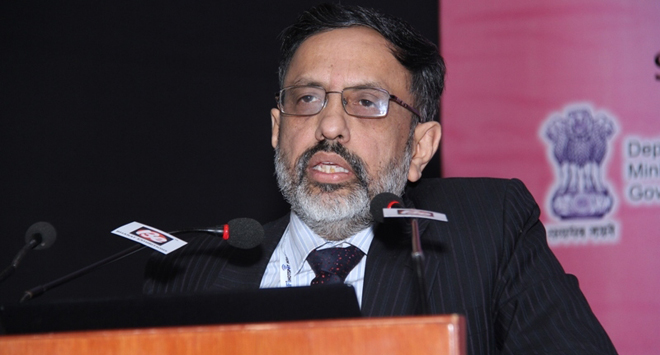
Ex-Cabinet Secretary Rajiv Gauba Launches PACT and ZET Marketplace, Pushes Strategic Electrification of India’s Freight Sector
Rajiv Gauba, PACT, ZET Marketplace, e-FAST India Summit 2026, electric trucks India, electric freight, zero-emission trucks, freight electrification, NITI Aayog, EV adoption India, electric mobility, heavy-duty electric vehicles
Rajiv Gauba Calls for Strategic Electrification of Freight Transport
New Delhi, September 8, 2026: Former Cabinet Secretary and NITI Aayog Member Rajiv Gauba has called for a more strategic and coordinated approach to electrifying India’s freight transport sector, arguing that the transition to electric mobility is no longer only an environmental concern but also a matter of energy security, economic development and long-term national strategy.
Gauba, a 1982-batch IAS officer of the Jharkhand cadre, made the remarks while delivering the inaugural address at the 5th e-FAST India Summit 2026. The event also saw the launch of two platforms – the Platform for Aggregating Clean Transport (PACT) and the Zero Emission Truck (ZET) Marketplace – aimed at addressing some of the structural barriers slowing the adoption of electric heavy-duty vehicles in India.
The two initiatives are intended to bring together different parts of the freight ecosystem, including demand, financing, charging infrastructure, logistics operators and vehicle manufacturers. The larger objective is to move beyond discussions around electric mobility and create mechanisms that can support commercially viable deployment of zero-emission trucks on major freight corridors.
e-FAST India Shifts From Dialogue to Action
In his address, Gauba pointed to the evolution of e-FAST India over the past four years. What began largely as a forum for discussion around electric freight and clean mobility has increasingly developed into a platform focused on coordinated action and implementation.
That shift, he suggested, reflects a broader change in India’s clean-mobility conversation. The focus is gradually moving away from simply establishing ambitious targets and towards building the infrastructure, financial mechanisms and institutional arrangements needed to actually achieve them.
Gauba stressed that electric mobility should not be viewed exclusively through the lens of reducing pollution or carbon emissions. For India, the transition also has direct implications for energy security, economic competitiveness and the country’s broader development objectives.
Faster adoption of electric vehicles will also be important as India works towards its long-term commitment of achieving Net Zero emissions by 2070. At the same time, Gauba linked the clean-mobility transition with the country’s broader vision of becoming a developed nation by 2047.
Government Measures Have Created an EV Foundation
Gauba also highlighted the range of measures taken by the government to establish an enabling ecosystem for electric mobility.
These include Production Linked Incentive schemes covering automobiles and Advanced Chemistry Cells, expansion of public charging infrastructure, and investments by Oil Marketing Companies to support charging facilities. Various demand-side measures have also been introduced to encourage consumers and operators to shift towards electric vehicles.
He referred to programmes such as FAME, PM e-DRIVE, PARIVARTAN and PM e-Bus Sewa as important initiatives that have contributed to the expansion of India’s electric-vehicle ecosystem.
These interventions have helped increase EV sales while simultaneously supporting the development of domestic manufacturing capabilities, charging infrastructure and policy frameworks. Yet the picture is considerably more complicated when it comes to heavy-duty freight vehicles.
Heavy Trucks Account for a Small Fleet Share but Huge Emissions
One of the central points of Gauba’s address was the disproportionate environmental impact of heavy trucks.
Heavy-duty trucks constitute only around 3-4 per cent of the total vehicle fleet, but they account for more than one-third of transport-sector carbon emissions. Their relatively small share of the overall vehicle population therefore masks their substantial contribution to fuel consumption and emissions.
This makes heavy trucks an especially important segment for India’s electrification strategy. However, replacing diesel-powered trucks with electric alternatives presents challenges that are quite different from those involved in electrifying passenger cars, two-wheelers or smaller commercial vehicles.
India’s freight ecosystem remains highly fragmented. Electric truck operators also face relatively high financing costs, while charging infrastructure is not yet being planned and deployed in a sufficiently coordinated manner along the country’s major freight corridors.
These constraints have slowed the transition even as electric mobility has expanded in other vehicle categories.
Only Around 800 Heavy Electric Trucks Sold in 2025
The scale of the challenge becomes clearer from the sales figures cited at the summit.
Only around 800 heavy-duty electric trucks were sold in India in 2025, highlighting the significant gap between the country’s overall EV ambitions and the adoption of electric vehicles in the freight segment.
The issue is particularly important because approximately 70 per cent of India’s freight is transported by road. Any serious attempt to decarbonise road transport, therefore, must address heavy commercial vehicles rather than concentrating primarily on passenger mobility.
Gauba argued that the answer lies in thinking about electrification at the level of freight corridors rather than treating each electric truck as an isolated purchase.
A corridor-based strategy could bring together truck deployment, charging infrastructure, financing, freight demand and logistics planning. Such coordination could provide greater certainty for both private companies and infrastructure providers and make investments easier to structure.
PACT and ZET Marketplace Aim to Close the Gaps
The newly launched PACT and ZET Marketplace are intended to tackle precisely these challenges.
The platforms seek to facilitate demand aggregation, financing innovation and corridor-based project development, bringing together stakeholders that have traditionally operated in separate parts of the freight ecosystem.
Demand aggregation could help create sufficient scale for electric truck purchases. Instead of individual operators making isolated investments, aggregated demand could potentially give manufacturers, financiers and infrastructure providers a clearer picture of the emerging market.
Corridor-level planning could similarly help determine where charging infrastructure should be developed and how it can be matched with actual freight movement and vehicle utilisation.
Financing is another critical piece of the puzzle. Electric trucks can involve significant upfront costs, and the cost of capital can make them less attractive to fleet operators when compared with conventional diesel vehicles.
Gauba Backs Blended Finance and Leasing Models
Gauba called for innovative financial mechanisms that can narrow the cost gap between electric trucks and their diesel counterparts.
Among the approaches highlighted were blended finance mechanisms and leasing models, which could help reduce the initial financial burden on fleet operators and improve the commercial viability of electric trucks.
The cost of capital remains particularly important because the economics of electric freight are not determined only by vehicle purchase prices. Financing terms, utilisation rates, charging costs, operating patterns and the availability of reliable infrastructure can all influence the overall economics of fleet electrification.
Gauba also underlined the importance of stronger data systems. Better data on freight demand, truck utilisation, charging requirements and corridor economics can help businesses and policymakers make more informed decisions and identify commercially viable opportunities.
The broader goal, he said, should be to bring the cost of capital for electric trucks closer to that of comparable diesel vehicles.
Industry Stakeholders Asked to Shape the New Ecosystem
Gauba urged logistics companies, vehicle manufacturers, charge-point operators and financial institutions to actively participate in the newly launched platforms.
Their involvement will be crucial in determining which freight corridors can be electrified most effectively, what kinds of financing products are required and which commercial models can make zero-emission trucking financially sustainable.
The transition to electric freight cannot be achieved simply by producing more electric trucks. It requires coordination across the entire ecosystem, from the availability of vehicles and financing to charging infrastructure and freight demand.
This is where platforms such as PACT and the ZET Marketplace could potentially play a significant role by creating a common space for different stakeholders to coordinate their efforts.
Government Should Create Systems That Allow Markets to Work
Gauba also used the summit to make a broader point about the role of government in complex and capital-intensive sectors.
According to him, government intervention is often most effective when it creates systems that allow markets to identify opportunities and shape outcomes rather than attempting to directly determine every commercial result.
PACT, in this context, represents an enabling mechanism. The platform is designed to help public- and private-sector stakeholders identify viable projects, develop commercial models and coordinate investments while addressing fragmentation within the freight ecosystem.
That approach could become increasingly important as India attempts to scale up electric freight. Large-scale electrification requires significant capital, long-term planning and coordination among multiple industries, making it difficult for individual companies to solve infrastructure and financing challenges independently.
The launch of PACT and the ZET Marketplace at the 5th e-FAST India Summit 2026 therefore marks an effort to take India’s electric-freight conversation into a more implementation-oriented phase.
For India, the challenge is no longer simply whether electric mobility can work. The bigger question is how quickly the country can create the financing, infrastructure, data and market mechanisms needed to make zero-emission freight commercially viable at scale.
With road transport carrying the overwhelming majority of the country’s freight and heavy trucks responsible for a disproportionately large share of transport emissions, strategic electrification of major freight corridors could become an important component of India’s broader clean-mobility and energy-security strategy.