

Supreme Court Sets Six-Month Deadline to Conclude All Pending Disciplinary Proceedings Against Former IPS Officer Amitabh Thakur
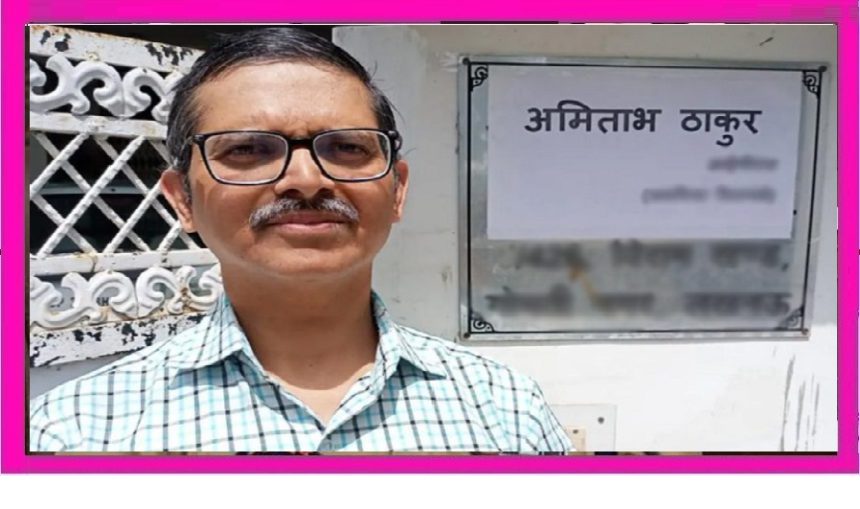
In a significant development in the prolonged legal and administrative battle involving former Indian Police Service officer Amitabh Thakur, the Supreme Court of India has directed both the Uttar Pradesh government and the Central Government to bring all pending disciplinary proceedings against him to a conclusion within six months.
The order is being viewed as a major step toward resolving a dispute that has lingered for years and has remained one of the most closely watched service-related cases involving a retired IPS officer. The matter concerns four separate departmental inquiries that have remained pending against Thakur, a 1992-batch IPS officer of the Uttar Pradesh cadre, even after his retirement from service.
The directive came from a bench comprising Justice Satish Chandra Sharma and Justice Sanjeev Sachdeva, which heard submissions relating to the status of the disciplinary proceedings. During the hearing, the Uttar Pradesh government informed the court that four departmental cases against the former officer were still awaiting final resolution.
After considering the submissions made by all parties, the apex court instructed both the state and central authorities to ensure that the pending proceedings are completed within a fixed timeframe of six months. The bench emphasized the need for timely closure of the matter, which has remained unresolved for an extended period.
The court’s intervention is expected to accelerate administrative action and bring clarity to a case that has generated discussion within bureaucratic and legal circles for years.
A Long-Running Service Dispute
The case traces its roots back nearly a decade. Amitabh Thakur has repeatedly argued that several disciplinary proceedings initiated against him remained pending for years despite his responses to departmental notices and communications issued by authorities.
According to submissions made on his behalf, the prolonged delay in finalizing the proceedings has had significant consequences, particularly regarding his retirement benefits and administrative clearance. Thakur has maintained that he has cooperated with the process and submitted replies wherever required, yet the inquiries continued to remain unresolved.
The lengthy pendency of these cases eventually became a central issue before the Supreme Court, prompting the court to examine whether a timeline should be fixed for their conclusion.
Retirement from Service in 2021
The controversy surrounding Thakur’s service career intensified in March 2021 when the Ministry of Home Affairs compulsorily retired him from service.
The Union Government had issued an order on March 23, 2021, retiring him in public interest. The decision was based on the assessment that he was “unfit to be retained” in service.
The compulsory retirement order effectively ended his active career in the Indian Police Service several years before the normal date on which he would otherwise have superannuated.
Official records indicate that had the retirement order not been issued, Thakur would have continued serving in the IPS until 2028. The decision therefore cut short what could have been several additional years of service.
The compulsory retirement itself became a subject of public discussion, given Thakur’s long history of disagreements and confrontations with successive governments and administrative authorities.
Claim Over Retirement Benefits
One of the key issues raised before the Supreme Court involved retirement-related dues that are allegedly yet to be released.
According to Thakur, the pending disciplinary proceedings have directly affected the settlement of his retirement benefits. He claimed that gratuity and other financial entitlements remain withheld because the departmental inquiries have not reached their logical conclusion.
His counsel informed the court that an amount of approximately ₹10 lakh in gratuity continues to remain pending. The argument presented was that the prolonged delay in completing the proceedings has effectively prevented closure of retirement-related matters.
Such situations are not uncommon in service law cases, where disciplinary proceedings often influence the release of certain retirement benefits until administrative clearance is obtained. However, in this case, the unusually long duration of the pending inquiries became a major point of concern.
Debate Over the Timeframe
During the hearing, counsel representing Amitabh Thakur requested the Supreme Court to direct the authorities to conclude the proceedings within three months.
The argument was based on the fact that the inquiries had already remained pending for several years and that further delay would only prolong uncertainty.
The bench, however, opted for a slightly longer timeline. While not accepting the request for completion within three months, the court directed the concerned authorities to finish the process within six months.
The order strikes a balance between the demand for speedy disposal and the practical requirements involved in completing departmental proceedings that may involve examination of records, evidence, and administrative formalities.
By fixing a definitive deadline, the Supreme Court has effectively ensured that the matter cannot remain pending indefinitely.
Career Marked by Controversy and Administrative Battles
Amitabh Thakur’s tenure in public service was frequently marked by disputes with administrative and political establishments.
Over the years, he became known for taking positions that often placed him at odds with those in authority. His service record witnessed multiple episodes involving transfers, inquiries, disciplinary proceedings, and legal challenges.
These confrontations contributed to a complex relationship between the officer and successive state administrations. Many of the disciplinary matters currently under consideration emerged from that turbulent phase of his service career.
Supporters of the former officer have often described him as a whistleblower and an outspoken officer willing to challenge powerful interests. Critics, on the other hand, have argued that repeated controversies affected his professional record and administrative functioning.
Regardless of differing perceptions, there is broad agreement that the disciplinary proceedings against him have remained unresolved for an unusually long period.
Why the Supreme Court Order Matters
Legal experts believe the Supreme Court’s latest directive carries significance beyond the individual case itself.
The order highlights the judiciary’s concern over prolonged departmental proceedings that remain pending for years without final determination. Such delays can create uncertainty for retired officials and complicate matters related to pensions, gratuity, and service benefits.
By imposing a six-month deadline, the court has sent a clear message that disciplinary cases cannot be allowed to remain open-ended indefinitely.
The ruling also places responsibility on both the Uttar Pradesh government and the Central Government to coordinate their actions and ensure compliance with the court’s timeline.
For Amitabh Thakur, the order may finally pave the way toward resolution of issues that have followed him long after his exit from public service.
What Happens Next?
The focus will now shift to the authorities responsible for conducting and finalizing the four pending departmental inquiries.
Over the next six months, officials will be expected to complete procedural requirements, examine records, consider submissions made by the former IPS officer, and issue final decisions in each case.
Once the proceedings are concluded, questions relating to administrative closure and pending retirement benefits are also expected to move toward resolution.
For now, the Supreme Court’s intervention has provided a clear roadmap and a fixed deadline in a dispute that has stretched across years. Whether the six-month timeline finally brings closure to one of the longest-running disciplinary sagas involving a retired IPS officer remains to be seen, but the court’s order has undoubtedly injected fresh momentum into a case that had remained stuck in administrative limbo for far too long.