
Who Is IPS Officer Abdur Rahman? Supreme Court Orders Fresh Review of His Voluntary Retirement Plea
In a significant judgment, the Supreme Court has granted relief to former IPS officer Abdur Rahman by setting aside the Central Government’s 2019 decision rejecting his request for voluntary retirement (VRS). The Court has directed the Ministry of Home Affairs (MHA) to reconsider his application afresh within three months after examining all relevant facts and disciplinary proceedings.
The ruling marks an important development in a legal dispute that has continued for nearly seven years and has kept Rahman’s retirement status unresolved.
Supreme Court’s Decision
A Bench comprising Justice P. S. Narasimha and Justice Alok Aradhe observed that the Central Government had not adequately scrutinized the complaints and disciplinary matters cited while rejecting Rahman’s VRS request in October 2019.
Rahman had sought voluntary retirement under the All India Services (Death-cum-Retirement Benefits) Rules, 1958, in August 2019. However, the Ministry of Home Affairs rejected the application on the grounds that complaints and disciplinary issues were pending against him.
The Supreme Court has now asked the Centre to conduct a fresh and reasoned review of the case.
Why Was His VRS Rejected?
The government cited several allegations and complaints while refusing his retirement request. These included:
Alleged custodial torture of a person in 2014.
Alleged second marriage in 2016 without the consent of his first wife.
A public speech delivered in 2019 that was allegedly contrary to service conduct rules.
Subsequent disciplinary proceedings linked to his participation in protests against the Citizenship Amendment Act protests.
The Supreme Court clarified that it was not examining the truth or merits of these allegations. Instead, it held that the government should have properly evaluated them before rejecting the retirement request.
Court Notes Delay in Disciplinary Proceedings
An important factor in the Court’s decision was the prolonged delay in disciplinary proceedings.
The Maharashtra government later issued charge sheets in three separate cases against Rahman, including one related to anti-CAA protests in 2022. However, despite several years having passed, the proceedings have reportedly not reached a conclusion.
The Court observed that such delays must be taken into account when deciding whether his voluntary retirement request should be accepted.
Who Is Abdur Rahman?
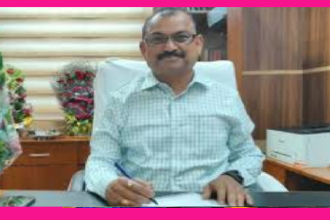
Abdur Rahman is a former IPS officer of the Maharashtra cadre who became widely known both for his policing career and later for his public positions on constitutional rights, minority issues, and governance.
Born on January 8, 1973, in West Champaran district of Bihar, he comes from a farming family.
Education
Rahman has an impressive academic background.
He completed his schooling in Bettiah, Bihar, before pursuing engineering studies.
He earned a Bachelor of Technology (B.Tech.) degree in Civil Engineering from Indian Institute of Technology Kanpur in 1995 and subsequently cleared the Civil Services Examination.
Career in the IPS
Rahman joined the Indian Police Service on September 7, 1997, and was allotted the Maharashtra cadre.
During more than two decades of service, he held several important assignments.
Key Postings
Assistant Superintendent of Police, Latur
One of his earliest field assignments after joining the IPS.
Superintendent of Police
He served as SP in districts including:
Dhule
Yavatmal
Chandrapur
During his tenure in Dhule, he reportedly led operations against highway dacoit gangs and organized criminal networks.
Principal, Police Training School, Solapur
He later headed the police training institution and was involved in capacity-building initiatives for police personnel.
Additional Commissioner of Police, Pune
Rahman served as Additional Commissioner (Administration) in Pune, one of Maharashtra’s largest cities.
Special Inspector General
His final posting was with the Maharashtra State Human Rights Commission as Special Inspector General of Police.
Opposition to the Citizenship Amendment Act
Rahman attracted national attention in December 2019 after publicly criticizing the Citizenship Amendment Act.
After Parliament passed the legislation, he announced his resignation, describing the law as unconstitutional and discriminatory.
He characterized his action as an act of “civil disobedience” and expressed concerns about its impact on India’s secular and pluralistic character.
However, his voluntary retirement application had already been submitted before these developments, and the dispute over its rejection became the subject of prolonged litigation.
Author and Public Intellectual
Following his departure from active policing, Rahman increasingly focused on writing, research, and public discourse.
Among his notable books are:
Denial and Deprivation
Absent in Politics and Power
Communal Crimes and National Integration
His writings primarily examine governance, social inclusion, minority representation, and constitutional issues.
Brief Entry into Politics
Ahead of the 2024 Lok Sabha elections, Rahman briefly entered electoral politics.
He was announced as a candidate from the Dhule parliamentary constituency by Vanchit Bahujan Aghadi, led by Prakash Ambedkar.
However, uncertainty regarding his service and retirement status reportedly complicated his political plans.
What Happens Next?
The Supreme Court has not granted voluntary retirement to Rahman. Instead, it has directed the Ministry of Home Affairs to undertake a fresh review.
The Centre must now examine:
The original complaints against him.
Subsequent disciplinary proceedings.
The prolonged delay in concluding those proceedings.
All material relevant to his retirement request.
A fresh decision must be taken within three months. The outcome will determine whether Abdur Rahman’s long-pending request for voluntary retirement is finally accepted or once again rejected after detailed scrutiny by the government.