

DoPT’s First-Ever IAS Mentorship Meet Is Happening at the Statue of Unity — And It’s a Big Deal for India’s Bureaucracy
India’s bureaucratic machinery is getting something it has arguably needed for a long time — a structured, government-backed mentorship programme that actually puts senior IAS officers in the same room as younger ones. Not for a conference. Not for a policy review. But specifically to talk, share, and pass things on.
The Department of Personnel and Training, better known as DoPT, has officially announced that the first-ever IAS Mentorship Meet will be held at the Statue of Unity in Ekta Nagar, Gujarat. Mark the date: October 31, 2026. That’s Rashtriya Ekta Diwas — National Unity Day — and the choice of both the date and the venue is anything but accidental.
Where Did This Idea Even Come From?
Here’s the thing. This whole initiative didn’t start inside some DoPT committee room. It came directly from Prime Minister Narendra Modi.
At the National Conference of Chief Secretaries held in December last year, PM Modi floated a suggestion that has now turned into something concrete. He said senior officers from the IAS and other civil services should be regularly sitting down with younger officers — not in a top-down lecture format, but in genuine conversation. Sharing experiences. Talking about what worked, what didn’t, what they wish someone had told them earlier in their careers.
Modi went a step further. He specifically proposed that senior officers visit the Statue of Unity on October 31 every year — Sardar Vallabhbhai Patel’s birth anniversary — and spend that day interacting with younger officers. The symbolism is hard to miss. Patel, the man who stitched together a fragmented post-colonial India into one nation, is exactly the kind of figure whose legacy you want hanging in the air when you’re talking about public service, commitment, and leadership.
DoPT took that suggestion and ran with it. The result is what you’re reading about now.
What’s Actually Going to Happen There?
So what does an IAS Mentorship Meet actually look like in practice? The programme is being designed as a structured platform — though “structured” here doesn’t mean stiff or overly formal. The whole point is meaningful exchange, not another bureaucratic sit-through.
Senior IAS officers and young officers from across the country will come together for mentorship sessions, one-on-one and group interactions, and discussions spanning a pretty wide terrain. We’re talking governance innovations, public administration challenges, policy design and implementation, crisis management, technology-led governance, and citizen-centric service delivery. Basically, the real stuff that officers deal with on the ground but rarely get to discuss in a cross-generational setting.
One of the more thoughtful aspects of how DoPT has designed this — officers are being selected from different batches and different administrative backgrounds. That’s deliberate. You don’t want everyone in the room coming from similar postings or similar states. The richer the mix of experiences, the better the conversations.
Why the Statue of Unity?
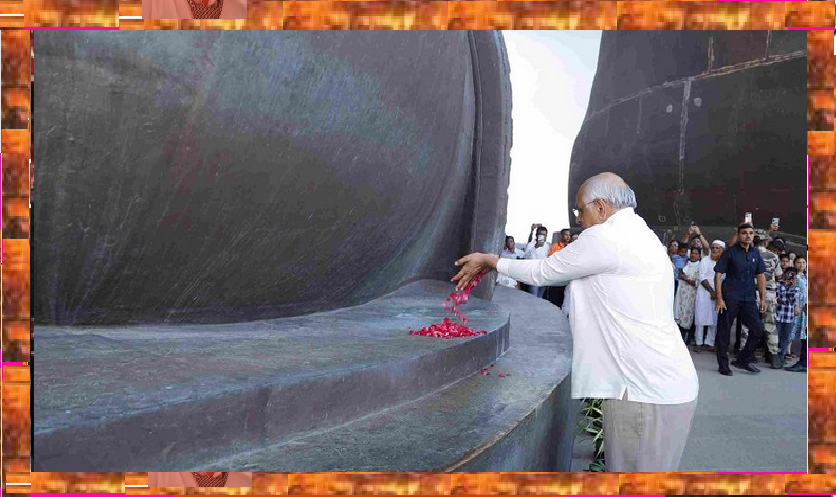
This isn’t just a pretty backdrop for photos. The Statue of Unity in Ekta Nagar, Gujarat, is the world’s tallest statue and a monument dedicated to Sardar Vallabhbhai Patel — India’s first Home Minister and the man credited with integrating over 500 princely states into the Indian Union after Independence. That was one of the most complex administrative and political feats in modern history, and Patel pulled it off.
Holding a civil services mentorship programme in his shadow, on his birth anniversary, sends a message. The DoPT has been quite explicit about this — the venue is meant to inspire officers by connecting them with Patel’s legacy of administrative commitment, national integration, and above all, a deep sense of public duty.
There’s something genuinely powerful about that framing. Young IAS officers, many of whom are still in the early years of their service, standing in a place that honours arguably the greatest administrator this country has ever produced. That’s not nothing.
States and UTs Are Now on the Clock
DoPT has already reached out to all state governments and Union Territory administrations. The ask is clear — nominate both senior and young IAS officers for the inaugural meet.
The department has been specific about what kind of officers it’s looking for. People with hands-on expertise in governance, policy formulation, public service delivery, developmental administration, and innovation. Not just officers with impressive designations, but people who have actually done things — who’ve run districts, managed crises, built systems, fixed broken ones.
Logistical arrangements and travel coordination for nominated officers will be handled by the respective state governments and UTs. So the states aren’t just spectators here — they’re active participants in making this happen.
Why This Matters More Than It Might Sound
India’s civil services carry an enormous amount of institutional knowledge. The problem is that knowledge often walks out the door when an officer retires. There’s no formal pipeline, no structured system that ensures what a 35-year veteran learned in Nagaland or Rajasthan actually gets passed on to someone joining their first district posting.
That’s the gap this initiative is trying to address. And it’s a real gap.
Younger IAS officers today are navigating genuinely complex challenges — rapid urbanisation, climate stress, digital governance, evolving citizen expectations, and policy environments that shift faster than they used to. Having access to officers who’ve handled comparable challenges in different eras and different states isn’t just useful. It’s the kind of thing that can actually change how someone thinks about their work.
The mentorship sessions are expected to cover crisis management, district administration, emerging tech in governance, and public policy — all areas where lived experience counts enormously and where no training manual fully substitutes for a real conversation with someone who’s been there.
The Bigger Picture
If this works — and there’s every reason to believe it can — October 31 at Ekta Nagar could become something genuinely significant on India’s administrative calendar. An annual gathering where the civil services take a breath, look inward, and invest in their own future leadership. Not through another exam or another training module, but through something older and more human: one person telling another what they’ve learned.
That’s the vision, anyway. And given where it started — a direct suggestion from the Prime Minister, formalised by DoPT, embraced by states — it has real institutional backing behind it.