

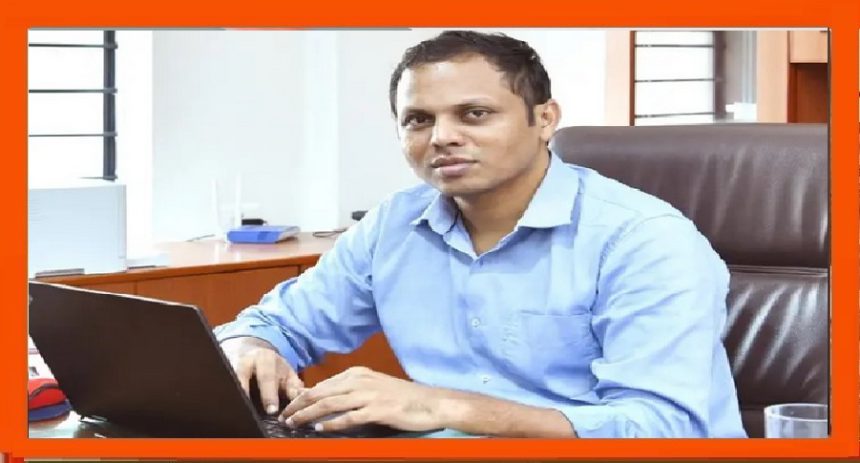
Who Is Seeram Sambasiva Rao? IIT-Madras Graduate and Tech-Savvy IAS Officer Appointed Kerala Excise Commissioner After Landmark CAT Ruling
Kerala has appointed IAS officer Seeram Sambasiva Rao as Excise Commissioner, restoring the post to the IAS cadre after nearly a decade. Know about the IIT Madras graduate’s career, achievements, digital governance initiatives, and the CAT ruling behind the appointment.
Thiruvananthapuram: A major administrative reshuffle in Kerala has brought one of the state’s most prominent mid-career bureaucrats into the spotlight. IAS officer Seeram Sambasiva Rao has been appointed as the new Excise Commissioner of Kerala, a move that is being viewed as much more than a routine transfer. The appointment follows a significant ruling by the Central Administrative Tribunal (CAT) and marks the return of the Excise Commissioner’s post to the Indian Administrative Service cadre after nearly ten years.
The Kerala government formally issued orders on June 1, 2026, appointing Rao to the influential position. The decision comes in the wake of a legal and administrative battle over cadre management that has reshaped the state’s bureaucratic landscape and reignited discussions about the allocation of key government posts.
For many observers, Rao’s elevation is not only a consequence of the tribunal’s ruling but also a recognition of his extensive experience in governance, digital transformation, public administration, and citizen-centric reforms.
A Landmark Administrative Shift in Kerala
The appointment is being seen as one of the most significant bureaucratic developments in Kerala this year.
For almost a decade, the position of Excise Commissioner had been held by officers from the Indian Police Service. That arrangement began in 2016 and continued through successive administrations. The latest decision effectively ends that chapter and restores the post to the IAS cadre.
The move follows a recent judgment by the Central Administrative Tribunal on a petition filed by the Kerala IAS Association. The association argued that several posts formally designated as IAS cadre positions by the Union Government should be occupied only by serving IAS officers.
After examining the issue, the Tribunal agreed with that interpretation and ruled that a number of important posts—including Excise Commissioner, Director of the Kerala Institute of Local Administration (KILA), and Director General of the Institute of Management in Government (IMG)—must be filled by officers belonging to the IAS cadre.
The ruling triggered immediate administrative changes.
One of the most visible consequences was the removal of senior IPS officer M R Ajith Kumar from the position of Excise Commissioner, creating the vacancy that has now been filled by Seeram Sambasiva Rao.
The decision is expected to have broader implications for cadre management and bureaucratic appointments across Kerala in the months ahead.
Who Is Seeram Sambasiva Rao?
Seeram Sambasiva Rao belongs to the 2012 batch of the Indian Administrative Service and is part of the Kerala cadre.
Born on December 10, 1985, in Andhra Pradesh, Rao represents a new generation of administrators who combine technological expertise with grassroots governance experience.
What makes his career particularly distinctive is his professional journey before joining the civil services.
Unlike many bureaucrats who enter government service immediately after graduation, Rao began his career in the private sector as a VLSI (Very Large Scale Integration) engineer, working in a highly specialized technology domain. The technical skills and analytical mindset he developed during that period would later influence his approach to public administration.
His educational credentials are equally impressive.
Rao graduated from the prestigious Indian Institute of Technology (IIT) Madras, earning a Bachelor of Technology degree in Electrical Engineering. The IIT background, coupled with industry experience, gave him a strong foundation in problem-solving, innovation, and technology-driven management.
Today, he is fluent in English, Telugu, and Malayalam and is widely regarded as one of Kerala’s most forward-looking administrators.
A Career Built on Innovation and Public Service
Since joining the IAS, Rao has served in a variety of assignments that have allowed him to work across multiple sectors of governance.
His administrative career reflects a balance between field-level governance and policy-level responsibilities.
Early Years in Wayanad
One of his earliest notable assignments came as Sub-Collector of Mananthavady in Wayanad district.
The posting provided him with valuable experience in rural administration, tribal welfare, land issues, and grassroots governance.
Residents and local officials often recall his emphasis on direct public interaction and community participation in governance. These early experiences helped shape his reputation as an officer who preferred practical problem-solving over bureaucratic formalities.
Transforming Governance in Kozhikode
Rao’s profile grew significantly during his tenure as District Collector of Kozhikode.
As Collector, he became associated with several innovative governance initiatives aimed at improving civic participation and service delivery.
Among the most widely discussed initiatives was the ‘Nammude Kozhikode’ programme, which focused on collaborative governance and citizen engagement.
His tenure gained even greater prominence during the COVID-19 pandemic.
At a time when local administrations across India were facing unprecedented challenges, Rao played a key role in coordinating relief and rehabilitation efforts for vulnerable sections of society.
His administration oversaw shelter arrangements for homeless individuals, welfare support for migrant workers, healthcare coordination, and emergency response mechanisms.
The district’s handling of several pandemic-related challenges earned praise from both citizens and administrative observers.
Modernising Kerala’s Land Administration
Another important phase of Rao’s career came when he was appointed Director of Survey and Land Records.
Land administration has traditionally been one of the most complex areas of governance in India, involving issues of ownership, documentation, disputes, and public access to records.
During nearly three years in the role, Rao focused on modernisation initiatives aimed at improving transparency and efficiency.
His tenure was marked by efforts to digitise land records, streamline administrative procedures, and use technology to make public services more accessible.
These initiatives were part of Kerala’s broader push toward digital governance and better service delivery.
Championing Digital Governance
Perhaps the most defining aspect of Rao’s administrative career has been his strong association with technology-enabled governance.
Over the years, he has emerged as one of Kerala’s leading advocates for using digital tools to improve public administration.
He served as Special Secretary in the Department of Electronics and Information Technology and simultaneously held the position of Executive Director of the Information Kerala Mission (IKM).
These assignments placed him at the centre of the state’s digital transformation efforts.
Under his leadership, several initiatives were undertaken to strengthen e-governance systems, improve local government functioning, digitise public services, and create more efficient administrative workflows.
His work has often been cited as an example of how technology can be integrated into governance without losing focus on citizen welfare.
Many of the projects associated with his tenure sought to bridge the gap between government institutions and the people they serve.
A Strong Believer in Data-Driven Governance
Throughout his career, Rao has consistently promoted evidence-based policymaking and data-driven decision-making.
Colleagues describe him as an administrator who combines technical expertise with a strong understanding of social realities.
He has frequently spoken about the role of technology in solving governance challenges and has participated in public forums, including TEDx events, where he discussed innovation in public administration.
One of the programmes closely associated with his work is the Exemplary Poverty Eradication Programme (EPEP), which focused on targeted interventions for economically vulnerable communities.
The initiative reflected his broader administrative philosophy: using data, technology, and institutional coordination to deliver measurable improvements in people’s lives.
His work has also touched on several other areas, including:
Women’s empowerment initiatives
Local self-governance reforms
Healthcare service improvements
Welfare programme delivery
Administrative modernisation
Digital inclusion
Why His Appointment Matters
Seeram Sambasiva Rao’s appointment as Excise Commissioner arrives at a particularly important moment for Kerala’s bureaucracy.
On one level, it represents compliance with the Central Administrative Tribunal’s ruling on cadre-post management. On another, it places an officer known for innovation, technology adoption, and administrative reform in charge of a department that plays a crucial role in state governance.
The Excise Department is responsible for regulating liquor administration, enforcing excise laws, monitoring compliance, preventing illicit trade, and generating significant revenue for the state government.
Managing such a department requires a combination of administrative skill, regulatory oversight, technological capability, and policy understanding.
Rao’s track record suggests that he brings all of these qualities to the role.
As Kerala implements the tribunal’s directions and realigns several key administrative positions, his appointment is likely to be viewed as one of the defining bureaucratic developments of 2026.
For now, all eyes will be on how the IIT-trained technocrat-turned-bureaucrat approaches his latest assignment and whether his reputation for innovation and digital governance can bring fresh momentum to one of Kerala’s most important regulatory departments.