

Tamil Nadu Chief Secretary M Sai Kumar Reviews Chennai Monsoon Works, Sets September 30 Deadline for Agencies
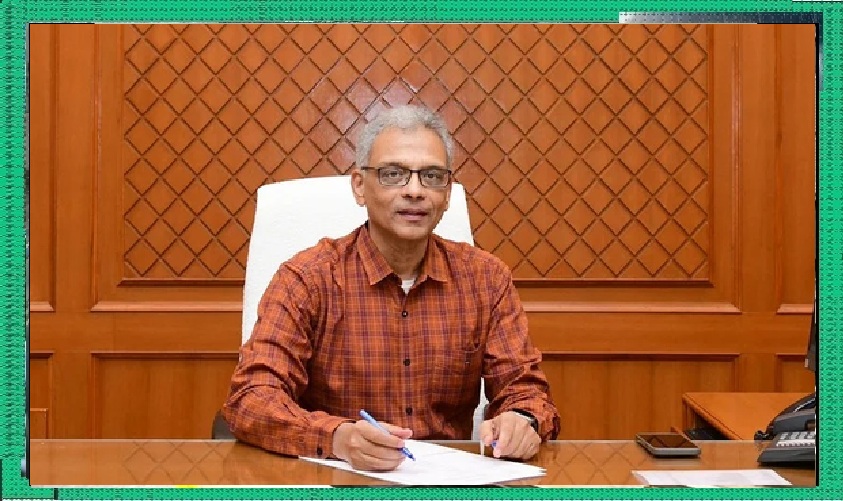
With the northeast monsoon approaching, Tamil Nadu Chief Secretary M Sai Kumar has stepped up the review of Chennai’s preparedness and directed all concerned departments and agencies to complete critical flood mitigation and drainage works by September 30. The review comes at a time when the city is closely watching the progress of stormwater drains, canal improvement projects and water-body cleaning works in several areas that remain vulnerable to heavy rainfall and waterlogging.
During an extensive field inspection covering parts of Adyar, Perungudi and Sholinganallur, the Chief Secretary examined the progress of several ongoing projects and stressed that there could be no room for delays as the monsoon draws closer. He also called for much closer coordination among the Greater Chennai Corporation, Water Resources Department, Highways Department, Chennai Metro Rail Limited (CMRL) and Chennai Metropolitan Water Supply and Sewerage Board (CMWSSB), particularly in areas where projects being handled by different agencies overlap or are taking place simultaneously.
The September 30 deadline is significant because the works being reviewed are directly linked to Chennai’s ability to manage intense rainfall during the northeast monsoon. Sai Kumar made it clear that the agencies concerned must maintain the pace of execution and ensure that infrastructure meant to carry away rainwater is ready before the weather conditions become more challenging.
Stormwater Drain Project Near TIDEL Park Reviewed
The inspection began in Adyar, where M Sai Kumar visited an ongoing stormwater drain project near TIDEL Park. The project has been taken up at an estimated cost of Rs 13.52 crore and is designed to provide an important drainage route for rainwater originating from the IIT area and carry it towards Buckingham Canal.
The Chief Secretary reviewed the progress of the drainage infrastructure on the ground and assessed whether the work was moving at a pace that would allow it to become operational within the stipulated timeframe. With the northeast monsoon expected to put considerable pressure on Chennai’s drainage network, the focus during the inspection was naturally on ensuring that the project is completed without unnecessary delays.
Officials accompanying the Chief Secretary were directed to accelerate the remaining work and make sure the project is completed by September 30. The emphasis was not simply on finishing construction but on ensuring that the drainage system is adequately prepared to perform its intended function once heavy rains begin.
Canal Improvement Works Examined in Perungudi
From Adyar, the inspection moved towards Perungudi, where Sai Kumar reviewed canal improvement works being carried out in Mylai Balaji Nagar in Ward 188. Canal capacity and maintenance are particularly important during the rainy season because these water channels form part of the larger network through which excess rainwater needs to move away from residential and urban areas.
One of the stretches being renovated in the first block is 235 metres long and 13 metres wide. The work has been sanctioned at a cost of Rs 6.48 crore and is aimed at improving the condition and functioning of the canal. Another canal stretch in the fourth block, measuring 207 metres in length and 14.40 metres in width, is being improved under a separate project estimated at Rs 8.68 crore.
The Chief Secretary took stock of the progress of both projects and reviewed the efforts being made to improve the drainage and water-flow arrangements in the area. The inspections were part of the wider effort to identify bottlenecks early and ensure that important works do not remain unfinished when the monsoon arrives in full force.
Water-Hyacinth Removal at Narayanapuram Lake
Sai Kumar also inspected water-hyacinth removal work at Narayanapuram Lake in Ward 189. The cleaning operation is aimed at improving the condition and effective capacity of the water body, which can play an important role in managing excess rainwater during periods of heavy rainfall.
The removal of water hyacinth and other obstructions is an important part of pre-monsoon maintenance because excessive growth and accumulated obstructions can interfere with the movement and storage of water. Keeping the lake and its associated water-flow systems clear is therefore being treated as part of the broader monsoon preparedness exercise in Chennai.
The Chief Secretary’s inspection also highlighted the need to approach monsoon preparedness as a coordinated exercise rather than as a collection of isolated projects. Drainage infrastructure, canals and water bodies all form part of the city’s larger water-management network, making timely maintenance and uninterrupted water flow particularly important.
Rs 73-Crore Stormwater Drain Project on OMR
The inspection then moved to Sholinganallur, where the Chief Secretary reviewed a major stormwater drain project being implemented by the Highways Department at Thoraipakkam on Old Mahabalipuram Road, popularly known as OMR, in Ward 193. The project carries a much larger estimated cost of Rs 73 crore and is expected to strengthen rainwater drainage in a crucial part of south Chennai.
The project is intended to facilitate the movement of rainwater from the Pallikaranai marshland towards Buckingham Canal. Given the importance of Pallikaranai as a major urban wetland and the growing development around OMR, effective drainage arrangements in this stretch remain a key component of Chennai’s monsoon preparedness.
During the inspection, Sai Kumar reviewed the status of the project and stressed the importance of maintaining coordination among the departments and agencies working in the area. CMRL-related works are also being undertaken nearby, making coordination even more important to avoid situations where one project affects the progress of another.
The Chief Secretary directed the agencies concerned to ensure that their respective works are properly synchronised. The objective is to prevent construction activity, road works or other infrastructure-related operations from slowing down the stormwater drainage project at a time when Chennai is preparing for the northeast monsoon.
Focus on Coordination and Timely Completion
The inspections underline the Tamil Nadu government’s growing focus on completing key monsoon preparedness works before the onset of heavy rainfall. Chennai’s drainage network involves multiple agencies, and delays in one project can potentially affect connected infrastructure elsewhere, which is why the Chief Secretary placed particular emphasis on inter-departmental coordination.
The Greater Chennai Corporation, Water Resources Department, Highways Department, CMRL and CMWSSB have different responsibilities across the city’s infrastructure network. Their work, however, often intersects at the same locations, especially in densely developed parts of Chennai where roads, drains, canals, metro infrastructure and water-management systems have to function alongside each other.
By setting September 30 as the target for the ongoing preparedness works, Sai Kumar has effectively put the agencies on a tight timeline ahead of the northeast monsoon. The message from the field inspection was clear: projects that are expected to strengthen Chennai’s ability to handle rainwater must move quickly, and coordination problems cannot be allowed to become a reason for delay.
The latest review comes as Chennai intensifies its preparations for the coming northeast monsoon, with particular attention being given to stormwater drainage capacity, canal renovation, water-body maintenance and the removal of obstructions. The work across Adyar, Perungudi and Sholinganallur reflects the broader effort to strengthen vulnerable stretches of the city before the arrival of sustained heavy rainfall.
For Chennai, the weeks leading up to the northeast monsoon are crucial. Ensuring that drains are functional, canals are capable of carrying excess water and water bodies remain free of obstructions can make a significant difference when intense rain hits the city. With September 30 now set as the completion target, the performance of the agencies involved will be closely watched as Chennai moves into the critical monsoon preparedness period.