

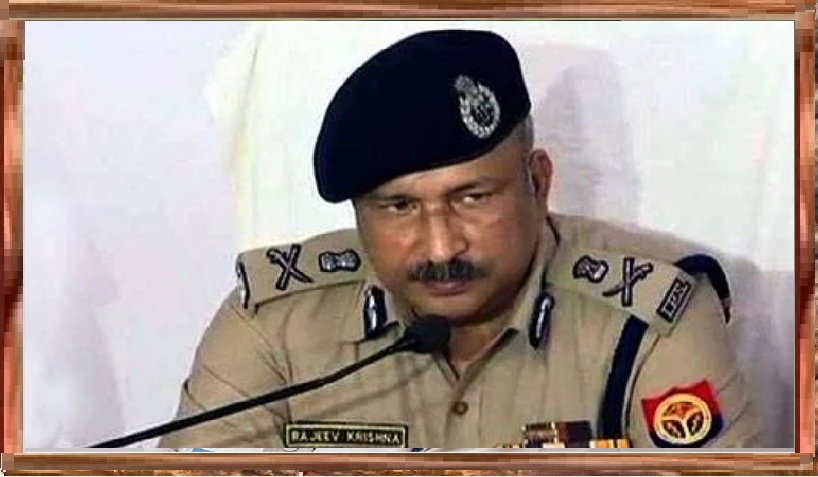
Uttar Pradesh Crime Rate Falls Below National Average, Says DGP Rajeev Krishna; Credits Yogi Government’s Zero-Tolerance Policy
Uttar Pradesh Director General of Police (DGP) Rajeev Krishna has said that the latest National Crime Records Bureau (NCRB) data reflects a significant improvement in the state’s law-and-order situation and validates the Yogi Adityanath government’s “zero-tolerance policy” against crime and organised criminal networks.
Citing the NCRB 2024 report, the Uttar Pradesh Police chief stated that the state has recorded a crime rate of 180.2, considerably lower than the national average of 252.3. According to him, the figures demonstrate the impact of sustained policing reforms, administrative monitoring, and technology-driven law enforcement initiatives implemented over the past several years.
Rajeev Krishna, a 1991-batch IPS officer of the Uttar Pradesh cadre, said the NCRB statistics provide an objective and scientific framework for comparing crime trends across states. He noted that Uttar Pradesh’s improved position is the outcome of continuous institutional reforms and aggressive action against criminal elements under the leadership of Chief Minister Yogi Adityanath.
“Zero-Tolerance Policy Has Produced Results”
The DGP emphasized that the state government’s strict anti-crime approach has played a central role in improving public safety and strengthening citizen confidence in the police system.
According to him, Uttar Pradesh Police has consistently acted against organised crime syndicates, habitual offenders, land mafias, and criminal gangs through coordinated operations and strict enforcement measures.
He said the “zero-tolerance policy” was not merely a slogan but a governance strategy that has been implemented at the ground level through active policing, stronger supervision, and rapid response mechanisms.
Officials in the police department believe the decline in the crime rate also reflects improved accountability within district policing units and enhanced coordination between intelligence, investigation, and prosecution wings.
Major Policing Reforms Highlighted
Rajeev Krishna outlined several initiatives that, according to the state police leadership, have contributed to the improvement in law and order across Uttar Pradesh.
Among the major reforms highlighted were:
Modernisation of police stations and communication systems
Expansion of women’s help desks in all police stations
Deployment of anti-Romeo squads to enhance women’s safety
Faster investigation and prosecution support through fast-track courts
Intensive action against organised crime and repeat offenders
Increased use of digital complaint monitoring systems
The DGP said these measures have collectively strengthened the rule of law and improved the responsiveness of the police administration.
“People Can Approach Police Without Fear”
Rajeev Krishna also stressed that public accessibility to policing has improved significantly in recent years. He said citizens are now approaching police stations with greater confidence and without fear or hesitation.
According to him, complaints received through online portals and digital grievance systems are being monitored seriously, and even minor complaints are promptly reviewed and converted into FIRs wherever legally required.
He argued that higher FIR registration should not be interpreted negatively, but rather as an indicator of a more transparent, accountable, and citizen-centric policing system.
Technology-Driven Policing and Future Focus
The DGP further stated that Uttar Pradesh Police is increasingly relying on technology-based policing tools, digital surveillance systems, cyber monitoring, and data-driven crime analysis to strengthen internal security and improve operational efficiency.
He said the police force remains committed to transparency, accountability, and rapid response under the broader governance vision of the Yogi Adityanath government.
Senior officials believe that continued investment in modern policing infrastructure, combined with strict enforcement and administrative oversight, will remain central to Uttar Pradesh’s strategy for maintaining law and order and improving public trust in the criminal justice system.