Who is Alok Tiwari? Meet the Elite IIT-LSE Alumnus Driving India’s Economic Policy at the Ministry of Finance
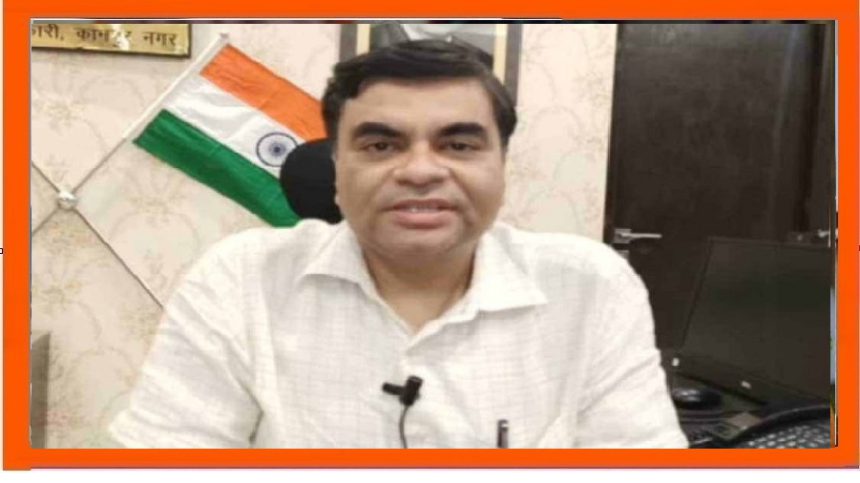
In the quiet, high-stakes corridors of North Block, stability is everything. When you are dealing with macroeconomics, fiscal frameworks, and complex market mechanisms, having the right hand on the steering wheel matters. That is precisely why the Central Government just dropped a significant administrative update: Alok Tiwari, a high-profile 2007-batch IAS officer from the Uttar Pradesh cadre, is not going anywhere.
The Appointments Committee of the Cabinet (ACC) gave the green light to a proposal extending Tiwari’s central deputation as Joint Secretary in the Department of Economic Affairs (DEA). According to the official notification cleared by the Department of Personnel and Training (DoPT), his tenure is being pushed out by another two years past September 26, 2026. This tactical extension locks him into his vital policymaking seat inside the Ministry of Finance until late 2028, underscoring the absolute trust the current administration places in his expertise.
Tiwari has been anchoring critical fiscal policies at the DEA since August 2024. This fresh vote of confidence ensures that India’s financial regulatory space maintains a steady course as global economic dynamics continue to shift.
The Power Blueprint: What is the DEA and Why Does This Extension Matter?
To the average onlooker, a bureaucratic extension might look like standard paperwork. But in the world of high finance, this is a calculated move to maintain institutional memory. The Department of Economic Affairs is essentially the central nervous system of India’s economic governance. It is the nodal agency responsible for formulating economic policies that dictate internal development, foreign investments, and financial market stability.
As Joint Secretary of the Financial Market Division, Tiwari sits right at the intersection of public policy and complex market movements. By keeping him at the helm, the government prevents any friction or operational lag that usually comes with a sudden leadership transition in such a sensitive department.
The Brain Capital: An Engineer and Economist Combined
What makes Alok Tiwari stand out from standard career bureaucrats is his highly specialized academic background. He belongs to a rare breed of administrators who possess both technical precision and deep economic training.
Hailing from Prayagraj, Uttar Pradesh, Tiwari’s educational track reads like an elite playbook. He finished his initial schooling at J.T. Golden Jubilee School in Allahabad before cracking the notoriously difficult JEE to secure a spot at the Indian Institute of Technology (IIT), Kanpur. Between 1997 and 2001, he completed his B.Tech in Mechanical Engineering, learning to approach problems with systemic, analytical logic.
But he didn’t stop at engineering. Recognizing that the modern state machinery runs on economic principles, he later paused his active field postings to expand his horizons overseas. Between 2014 and 2016, he attended the world-renowned London School of Economics and Political Science (LSE), coming back with a Master of Science (M.Sc.) in Economics.
This rare dual edge – an IIT tech background fused with an LSE economics degree – makes him uniquely equipped to handle the numbers, data modeling, and intricate policy formulas that land on his desk every single day.
From UP Districts to the Union Defence Ministry
Tiwari did not just drop straight into the central financial corridors; he earned his stripes through grinding field administration in one of the most politically intense states in the country.
During his years serving across Uttar Pradesh, he took on several heavy-duty field assignments:
Joint Magistrate – CDO: Mastering ground-level development planning and rural supply chains.
District Magistrate of Mathura: Managing a high-profile, sensitive cultural and religious hub.
District Magistrate – Collector of Kanpur Nagar: Running an industrial powerhouse city with immense public administration and infrastructure challenges.
These intense field stints gave him a front-row seat to how policies decided in New Delhi actually play out on the ground. His massive administrative capability caught the eye of central leadership. In September 2021, the ACC moved him to New Delhi as the Private Secretary to Union Defence Minister Rajnath Singh.
Working closely with the Defence Minister, Tiwari spent three years handling highly confidential administrative tasks, strategic policy updates, and operational planning within the Ministry of Defence. This high-octane role solidified his reputation as a cool-headed, deeply reliable administrator.
The Homecoming to Finance: Shaping National Policy
His stellar run at the Defence Ministry paved his way into the Ministry of Finance in August 2024. Stepping into the DEA as Joint Secretary, Tiwari was immediately thrown into the deep end of economic policy formulation.
His work involves navigating complex interactions with global entities, tracking bilateral funding, and ensuring India’s financial markets run seamlessly. Just a few months ago, in March 2026, he was at the forefront representing India to sign official notes with Japanese Ambassador Keiichi Ono, locking in crucial Official Development Assistance (ODA) for massive urban transport, health, and agricultural projects across the country.
Why the Continuity Matters
The decision by the top brass to extend his stay at the DEA until 2028 is a direct nod to his performance. At a time when India is aiming for aggressive capital expenditure, pushing for deep financial market reforms, and maintaining steady growth despite global curveballs, having an LSE-trained economist managing active files is a major asset. This extension ensures the Ministry of Finance keeps its intellectual momentum going without missing a single beat.