

India’s Freedom Struggle Was So Much More Than a Political Fight — IAS Officer Raju Narayana Swamy Tells Mahe Students What It Actually Built and Why It Still Matters
When one of India’s most unconventional bureaucrats takes the stage at a student felicitation ceremony, you don’t get a routine address about working hard and staying focused.
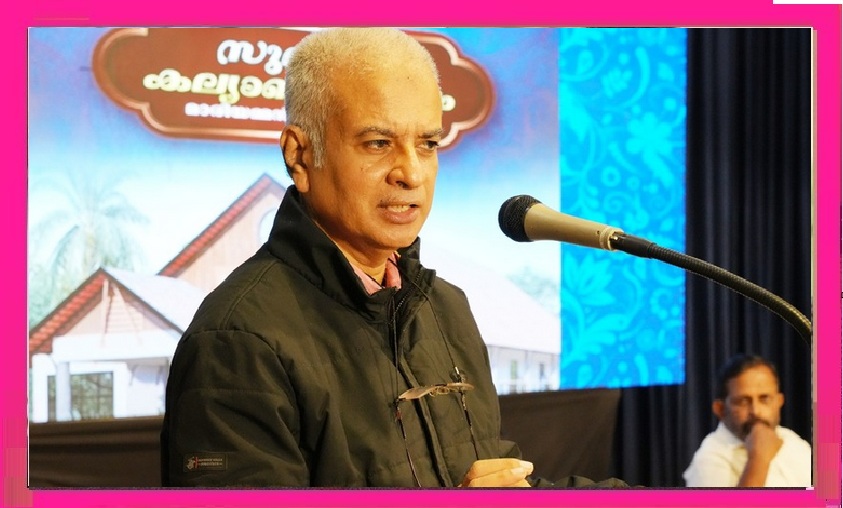
You get something considerably more thought-provoking. Dr. Raju Narayana Swamy, the 1991-batch Kerala cadre IAS officer who holds All India Rank 1 in the 1990 Civil Services Examination and has reportedly been transferred more than 30 times for refusing to bend, spoke at a function in Mahe organised in memory of freedom fighter Sri Kummaya Mukundan — and the address was anything but ceremonial.
His central argument, delivered to students being felicitated for academic excellence, was this — the Indian freedom movement wasn’t just a campaign to get the British out. It was something rarer and more durable: an ideological incubator that generated the values, principles and constitutional commitments that still define what India is and what it’s trying to be.
That framing deserves to be taken seriously, and Dr. Swamy developed it with the kind of depth you’d expect from a bureaucrat who has also written over 30 books.
The Constitution Didn’t Come From Nowhere
The most important thread running through Dr. Swamy’s address was about origins — specifically, where India’s constitutional identity actually came from.
He argued that the guarantees enshrined in the Preamble of the Constitution — justice, liberty, equality, fraternity — weren’t invented in the Constituent Assembly between 1946 and 1949. They were articulated, debated, tested and refined over decades of struggle against colonial rule. The Constituent Assembly gave them legal form, but the freedom movement gave them moral substance and popular legitimacy.
“The freedom struggle was much more than a political campaign,” he told the gathering. “It nurtured the ideals that later found expression in the Constitution of India and continue to guide the nation’s democratic framework.”
This is an important distinction. A constitution imposed from above, or crafted by technocrats without popular grounding, is a fragile document. India’s Constitution drew its strength from the fact that millions of people had already been living and fighting for its core values before it was ever formally written. The freedom movement created the constituency for constitutional democracy — and that’s why those institutions have been more resilient than comparable ones in countries that underwent more abrupt transitions.
Secularism Wasn’t Invented by Politicians — It Was Forged in the Struggle
Dr. Swamy made a pointed observation about secularism — one that cuts against a common misconception that it was somehow imposed on India by Nehruvian elites after Independence.
The freedom movement, he argued, was deeply and practically secular. Leaders of the independence struggle recognized early on that a movement fighting for the dignity of hundreds of millions of people could not afford to exclude any community. The mobilization that sustained the struggle across decades — through the Non-Cooperation Movement, the Civil Disobedience Movement, the Quit India Movement — required the active participation of Indians across every religious, caste and regional line.
That necessity became a value. The experience of standing together across difference — of recognizing that Hindu, Muslim, Sikh, Christian and every other community had a shared stake in the outcome — built an intuitive commitment to equal treatment and pluralism that preceded its constitutional codification.
When Dr. Swamy says the movement fostered “a deep commitment to secularism and democratic governance,” he’s not describing an abstract philosophical preference. He’s describing something that was forged under pressure, through collaboration across communities, over generations.
The 1930s Turn Toward Social Justice
One of the more historically specific points in Dr. Swamy’s address involved the evolution of the freedom movement’s agenda in the 1930s.
The early phases of organized Indian nationalism were primarily focused on political self-rule — getting the British out, restoring Indian sovereignty. But by the 1930s, the movement had developed a much broader social vision. The question of who would actually benefit from independence — whether political freedom would translate into social and economic freedom for the poor, for the lower castes, for women, for marginalized communities — became increasingly central to the national debate.
Dr. Swamy highlighted this as a crucial development. The movement began advocating for social justice and economic equity, not just political change. This wasn’t a distraction from the central struggle — it was an expansion of what the struggle was actually for. Independence that merely transferred power from British administrators to a different elite would have been a hollow victory.
The movement’s turn toward inclusive development and welfare-oriented governance created the ideological foundation for India’s post-Independence commitments to planned development, poverty alleviation and affirmative action.
Swadeshi — Economic Nationalism That Still Resonates
Dr. Swamy spent time on the Swadeshi Movement, and the framing he used is worth noting. He described the boycott of foreign goods and the promotion of indigenous production not simply as an anti-colonial protest tactic, but as a philosophy of economic self-reliance and national pride.
“The boycott of foreign products was not merely an act of protest but a powerful expression of economic nationalism and self-reliance,” he said.
The Swadeshi philosophy created something durable — an intuition that economic sovereignty and political sovereignty are interconnected, that a nation that depends entirely on others for its goods, technology and capital is not truly independent in any meaningful sense. That intuition has played out across India’s post-Independence economic history in various forms, and the debate between openness and self-reliance in economic policy remains very much alive today.
By connecting the Swadeshi movement to contemporary ideas about economic nationalism and indigenous industry development, Dr. Swamy was drawing a line from Gandhian economics to current policy debates — making history feel relevant rather than archival.
Ahimsa and Satyagraha — The Argument That Changed the World
Dr. Swamy’s address also touched on what is perhaps the freedom movement’s most globally significant contribution — the demonstration that non-violent resistance could actually work against an imperial power.
Ahimsa and Satyagraha weren’t just tactical choices. They were moral arguments — claims about the nature of power, legitimacy and justice. Gandhi’s genius was recognizing that colonial rule ultimately rested on the consent or acquiescence of the colonized, and that withdrawing that consent — peacefully, publicly, persistently — could make colonial administration unworkable.
The success of those methods didn’t just liberate India. It provided a template that influenced independence movements and civil rights struggles around the world. Dr. Martin Luther King Jr. explicitly drew on Gandhian principles. Nelson Mandela engaged seriously with the idea of non-violent resistance even as he ultimately concluded that conditions in South Africa required a different approach. The model that India demonstrated continues to inspire democratic movements globally.
Dr. Swamy’s point that the freedom movement “provided one of the world’s most significant examples of how non-violent collective action can become a transformative force” isn’t hyperbole — it’s historically accurate.
What He Asked of the Students
The immediate audience for all of this analysis was a room full of students being recognised for their academic achievements. Dr. Swamy’s message to them was clear and direct — inheriting these values isn’t passive. It’s a responsibility.
He urged the younger generation to actively uphold the principles inherited from the freedom movement — democracy, secularism, social justice, equality, self-reliance, non-violence — in their personal and professional lives. Not as abstract ideals to be admired in history books, but as living commitments that require active choices.
He also pushed them toward something specific — becoming a generation that is spiritually grounded, technologically empowered and nationally conscious. That’s a combination he has talked about before in different contexts — the argument being that technical excellence without ethical grounding produces capability without direction, while values without capability produce good intentions without impact. India needs both.
About the Speaker
Dr. Raju Narayana Swamy isn’t a typical IAS officer, and hasn’t been for his entire career. He topped the 1990 Civil Services Examination and graduated from IIT Madras with a 9.41 CGPA in Computer Science – so the technical foundation is genuine. He has served as District Collector in five different districts, held the positions of Director of Fisheries and Principal Secretary, and won the Satyendra K. Dubey Memorial Award for integrity in public service.
The 30-plus transfers are the part of his biography that tends to generate the most discussion. They reflect a career spent making decisions on principle rather than convenience — and paying the administrative price for it repeatedly. The fact that he keeps showing up, keeps speaking plainly and keeps being posted to new roles despite the friction says something about both his character and the system’s eventual inability to simply make him disappear.
He has also written more than 30 books, earning recognition from the Kerala Sahitya Akademi — making him one of the rare senior civil servants who is a serious literary figure alongside his administrative career.
When Dr. Raju Narayana Swamy speaks about the values the freedom movement built, he’s not reading from a script. He’s speaking as someone who has tried to actually live those values inside one of India’s most politically complex state bureaucracies — and has the transfer orders to prove it.