

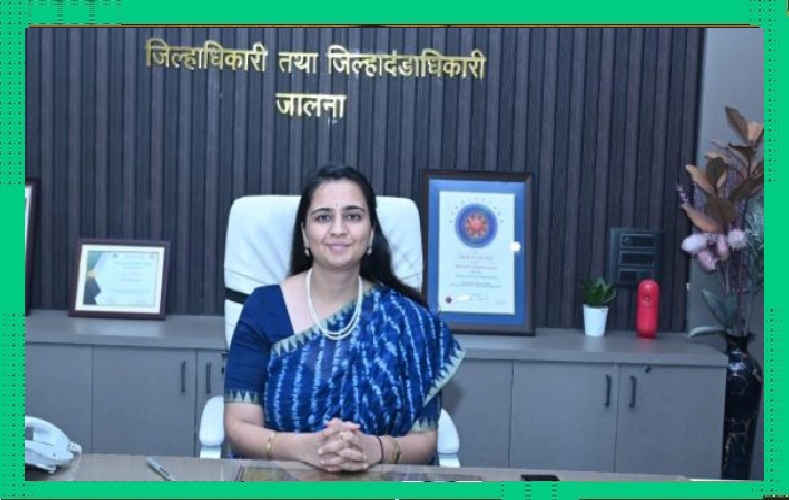
Who Is IAS Ashima Mittal? IIT Bombay Alumna at the Centre of Maharashtra’s Talks With Manoj Jarange Patil Over Maratha Reservation
IAS officer Ashima Mittal has suddenly found herself at the centre of one of Maharashtra’s most sensitive administrative situations. The 2018-batch Maharashtra cadre officer, who is currently serving as Jalna District Collector, is engaging directly with Maratha reservation activist Manoj Jarange Patil as his latest hunger strike at Antarwali Sarati enters its fifth day.
Jarange Patil’s continuing fast has once again brought the Maratha reservation issue into sharp focus, putting the state government and the local administration under considerable pressure. Against this backdrop, Mittal has emerged as an important link between the Maharashtra government and protesters at the site, where emotions remain high and the administration is also keeping a close watch on Jarange Patil’s health.
The Collector recently visited the protest site as a representative of the state government and held discussions with Jarange Patil and other protesters. The conversation reportedly became tense at one point after Jarange Patil objected to what he perceived as an attempt to put forward only the government’s position instead of addressing the concerns of those leading the agitation.
Mittal, however, remained composed and continued the interaction. Her decision to stay and engage despite the sharp exchange underlines the nature of the responsibility currently resting on her shoulders. As Jalna Collector, she is required to maintain communication with the protesters while also dealing with the law-and-order, administrative and health-related challenges arising from the prolonged agitation.
Ashima Mittal Appeals to Jarange Patil to End Hunger Strike
On Tuesday night, Ashima Mittal met Manoj Jarange Patil at the protest site and appealed to him to reconsider his decision to continue the hunger strike. During the meeting, she reportedly read out a list of decisions taken by the Maharashtra government on the Maratha reservation issue and explained the government’s position to Jarange Patil and those present at the site.
The exchange, however, did not remain entirely cordial. Jarange Patil reportedly objected to the approach adopted by the Collector and questioned the purpose of her visit if she had come only to communicate the government’s side. He is reported to have told her that she could leave if that was all she intended to do.
Mittal did not leave the site. Instead, she continued speaking with the protesters and maintained the dialogue, even as the discussion became heated. She also appealed to Jarange Patil to look after his health and withdraw his hunger strike, an issue that has become increasingly important for the district administration as the fast continues.
Her role in the episode goes well beyond that of a senior district official making a routine visit. The Collector is operating at the point where the state government’s decisions, the protesters’ demands and the district administration’s law-and-order responsibilities meet. That makes communication particularly important.
Jarange Patil’s 11th Hunger Strike Over Maratha Reservation
The ongoing protest is reportedly Jarange Patil’s 11th hunger strike in connection with the demand for Maratha reservation. His repeated agitations have made him one of the most prominent faces of the reservation movement in Maharashtra, with his protests frequently attracting large numbers of supporters and significant political and administrative attention.
The continuation of the latest fast has created a difficult situation for the administration. Officials have to remain in contact with the protesters, monitor the health of the fasting activist and ensure that the situation around the protest site does not turn into a law-and-order problem.
This is where Mittal’s position becomes especially significant. As Jalna Collector, she is among the key officials responsible for managing the situation on the ground. Her engagement allows the state government to communicate directly with the protest leadership while giving the administration an opportunity to understand the mood and concerns of those participating in the agitation.
The Collector’s appeal to Jarange Patil to end the fast also reflects another concern facing the administration. A prolonged hunger strike can raise serious health issues, meaning that the situation is not simply a matter of political negotiations. It also has a direct administrative and humanitarian dimension.
Who Is IAS Ashima Mittal?
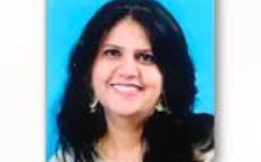
Ashima Mittal is a 2018-batch Indian Administrative Service officer of the Maharashtra cadre who has built her career across field administration, rural development and education-focused initiatives. Born on June 30, 1992, she is originally from Jaipur, Rajasthan, and comes from a strong academic background.
Mittal studied Civil Engineering at the Indian Institute of Technology Bombay and completed her B.Tech in 2014. Her time at IIT Bombay was marked by notable academic and co-curricular achievements, for which she received the prestigious Dr Shankar Dayal Sharma Gold Medal.
Her academic journey later took a different direction. While preparing for the Civil Services Examination, she pursued an M.A. in Anthropology from IGNOU, Delhi. The subject would eventually become significant in her UPSC journey as she selected Anthropology as her optional subject.
Before joining the civil services, Mittal is reported to have had a brief stint in the private sector. She eventually left her corporate job to concentrate on the UPSC Civil Services Examination, setting herself on a path that would eventually lead to a career in the IAS.
From UPSC Setback to All India Rank 12
Mittal’s entry into the civil services was the result of persistence over multiple attempts. Her first appearance in the UPSC Civil Services Examination did not go as planned, as she could not clear the preliminary examination.
She returned for a second attempt and cleared the examination with an All India Rank of 328. That result was a significant improvement, but Mittal continued to aim higher and appeared for the examination once again.
Her third attempt brought a remarkable result. She secured All India Rank 12 in the Civil Services Examination, earning her a place among the country’s top-ranked successful candidates and eventually entering the IAS.
Her choice of Anthropology as an optional subject was particularly relevant because she had already pursued postgraduate studies in the discipline. Her UPSC journey, moving from an unsuccessful first attempt to AIR 328 and then to AIR 12, has since become one of the defining features of her career story.
Her academic accomplishments began well before the UPSC examination. She was reportedly associated with prestigious academic programmes and scholarships, including the National Talent Search Examination and the Kishore Vaigyanik Protsahan Yojana. Her record at IIT Bombay, including the Dr Shankar Dayal Sharma Gold Medal, added another distinction to her academic profile.
Early IAS Career in Maharashtra
After joining the IAS and being allotted the Maharashtra cadre, Mittal began her administrative career through field-level assignments. She served as Assistant Collector and Project Officer in Dahanu, gaining practical experience in district administration and the implementation of government programmes.
Such field postings are an important part of an IAS officer’s early career because they provide direct exposure to the realities of governance. For Mittal, the experience in Dahanu offered an opportunity to work closely with local administration and understand how government policies translate into action at the grassroots level.
She subsequently moved to Nashik, where she served as Chief Executive Officer of the Nashik Zilla Parishad. The assignment gave her a wider administrative canvas and brought her into the areas of rural development and education.
Her tenure in Nashik attracted attention for several education-related initiatives. Among them was the ‘Super 50’ programme, which was designed to provide selected students with focused preparation and better educational opportunities. Her tenure was also associated with efforts to promote digital learning and introduce innovative educational tools, particularly for students from disadvantaged backgrounds.
These initiatives contributed to her image as an administrator who placed considerable emphasis on education, technology and grassroots interventions. She served as CEO of the Nashik Zilla Parishad for nearly three years before moving to another major assignment.
Ashima Mittal Takes Charge as Jalna Collector
Mittal took charge as District Collector of Jalna on July 30, 2025. The appointment placed her at the helm of the district administration, with responsibilities covering a wide range of issues including revenue administration, development programmes, coordination among government departments and law-and-order management.
The Jalna posting has now brought her into a markedly different kind of administrative challenge. The district has become a focal point of the Maratha reservation movement because of the repeated protests led by Jarange Patil at Antarwali Sarati.
As the agitation continues, the district administration has to perform several tasks simultaneously. It must facilitate communication with protesters, maintain public order, coordinate the state government’s response and remain alert to the health condition of the hunger striker.
Mittal’s direct engagement with Jarange Patil has therefore given her role an added public dimension. She is no longer dealing only with routine district-level governance. She is now one of the senior administrative officers directly involved in handling a major socio-political movement.
From Education Initiatives to a High-Pressure Administrative Challenge
Ashima Mittal’s career so far reflects the wide range of responsibilities an IAS officer can encounter during a relatively short period. Her early assignment in Dahanu gave her exposure to grassroots administration, while her years with the Nashik Zilla Parishad allowed her to work on education and rural development initiatives.
Her posting in Jalna has presented a completely different challenge. The Maratha reservation issue is politically sensitive, socially significant and capable of generating large-scale public mobilisation. Managing such a situation requires patience, communication skills and careful coordination between different arms of the administration.
For Mittal, the immediate priority is to keep the dialogue with Jarange Patil and the protesters open. At the same time, the administration must continue to monitor the situation around the protest site and ensure that public order is maintained.
Her recent interaction with Jarange Patil illustrates the difficult position of a district Collector during a major public agitation. The officer has to represent the government without allowing communication with protesters to break down, while also responding to concerns that may not always align with the official position.
As Jarange Patil’s hunger strike continues, Ashima Mittal’s role in Jalna is likely to remain under close observation. Her journey from IIT Bombay and a remarkable UPSC rank to the demanding world of district administration offers a striking example of how an IAS officer’s responsibilities can change dramatically over the course of a career.
In Jalna, her current challenge is not simply about delivering government messages. It is about keeping a difficult conversation going at a time when the stakes are high, emotions are intense and the administration is under pressure to find a workable path forward.