

J&K Fast-Tracks AI Governance Revolution: 20 Artificial Intelligence Use Cases Across 8 Sectors, MeitY Centre of Excellence at IIT Jammu to Go Live by August 2026
Jammu and Kashmir is preparing for one of its biggest technology-driven governance transformations yet. The Union Territory has decided to accelerate the adoption of Artificial Intelligence across government departments, with nearly 20 AI-powered governance use cases identified for implementation in eight critical sectors. At the same time, another major milestone is around the corner. The Ministry of Electronics and Information Technology (MeitY)-supported Centre of Excellence in Artificial Intelligence at IIT Jammu is expected to become fully operational by August 2026, giving a significant push to AI research, innovation and public service delivery.
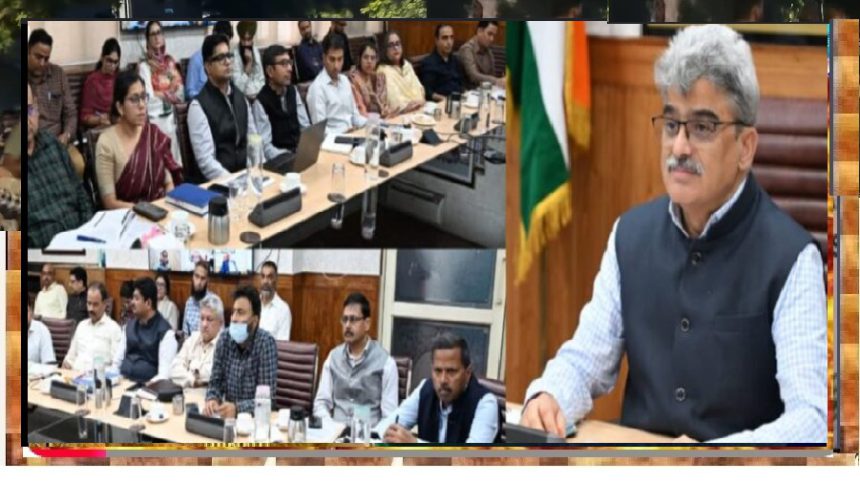
The ambitious roadmap was reviewed during a high-level meeting chaired by Chief Secretary Atal Dulloo, a 1989-batch IAS officer. Senior bureaucrats, representatives from IIT Jammu, BISAG, the Information Technology Department and officials from several administrative departments participated in the discussions. The meeting focused on speeding up AI implementation, strengthening institutional coordination and ensuring that projects move from planning to execution without unnecessary delays.
AI to Drive the Next Phase of Governance
Chairing the review meeting, Chief Secretary Atal Dulloo made it clear that Artificial Intelligence should no longer be viewed as an optional technology. Instead, he described it as a strategic governance tool capable of reshaping the way public administration functions.
According to him, AI has the potential to make governance faster, more transparent and considerably more responsive to citizens. Better decision-making, smarter service delivery and improved efficiency across departments can all be achieved if Artificial Intelligence is integrated thoughtfully into government systems.
He stressed that the objective should not be to create new standalone digital platforms. Existing government portals and digital infrastructure should instead be strengthened by embedding AI solutions wherever they can improve efficiency and public services. Such an approach, he observed, would reduce duplication of resources while ensuring smooth coordination between different government systems.
Departments Directed to Speed Up AI Projects
The Chief Secretary instructed every Administrative Department to work closely with the Information Technology Department to ensure that identified AI projects are implemented without delay.
He asked departments to nominate dedicated nodal officers who would serve as the primary point of contact for Artificial Intelligence initiatives. These officers will coordinate with technology experts, monitor project execution and facilitate quicker decision-making whenever required.
Departments were also directed to provide high-quality datasets that would be needed for developing, testing and validating AI models. Since Artificial Intelligence depends heavily on accurate and structured data, officials were told that maintaining data quality would be one of the most important responsibilities during implementation.
Another important instruction focused on departmental ownership. Dulloo underlined that every department must actively participate in executing its respective AI projects rather than treating them as purely technology-driven exercises. Close collaboration between administrative departments and technical experts, he said, would determine the success of the initiative.
Workshops to Prepare Departments Before Pilot Launches
Recognising that Artificial Intelligence projects often require extensive planning before deployment, the Chief Secretary proposed a structured implementation model.
Instead of launching pilot projects immediately, departments have been asked to organise sector-specific workshops involving nodal officers, implementation agencies, domain specialists, technology partners and subject experts.
These workshops will evaluate several critical aspects before pilot projects begin. Officials will assess the availability of reliable datasets, examine existing technological infrastructure, review operational workflows and identify practical challenges likely to arise during field implementation.
The idea is to ensure that every AI application is backed by realistic planning rather than theoretical assumptions. Officials believe this approach will help identify potential obstacles early and improve the chances of successful implementation across departments.
Dulloo also directed departments to monitor every AI initiative through clearly defined milestones and measurable performance indicators. This, he said, would help authorities regularly evaluate progress while resolving implementation bottlenecks before they become larger problems.
MeitY Centre of Excellence at IIT Jammu Nears Completion
A major highlight of the review meeting was the progress report on the upcoming MeitY Centre of Excellence in Artificial Intelligence being established at IIT Jammu.
Commissioner Secretary, Information Technology, Saurabh Bhagat, presented the organisational structure, implementation strategy and long-term roadmap of the Centre.
Officials informed the meeting that infrastructure development is progressing steadily and approximately 10,000 square feet of space has already been earmarked for the facility.
The Centre is expected to begin operations by August 2026, marking an important step in Jammu and Kashmir’s digital transformation journey.
Authorities also confirmed that Key Performance Indicators (KPIs) and the overall implementation roadmap have already been finalised in consultation with the Ministry of Electronics and Information Technology.
Work has also started on procuring High-Performance Computing infrastructure that will support the proposed Artificial Intelligence Digital Public Infrastructure (AI-DPI). This advanced computing ecosystem will enable AI model development, large-scale data processing and future innovation across multiple governance sectors.
Twenty AI Use Cases Identified Across Eight Priority Sectors
One of the biggest outcomes of the review meeting was the confirmation that Jammu and Kashmir has already identified 20 practical AI use cases covering eight major sectors.
These sectors include:
Education
Skill Development
Agriculture
Power Development
Public Governance
Health and Medical Education
Transport and Infrastructure
Emerging sectors including Tribal Welfare and Security
Officials informed the Chief Secretary that consultations have already taken place with leading academic institutions, technology companies, startups and research organisations to develop practical AI solutions that can directly improve governance.
Several technology partners have reportedly shown interest in executing pilot projects, while multiple proposals are currently undergoing technical evaluation before final approval.
AI Solutions Planned Across Public Services
The proposed AI applications cover a wide range of citizen-centric services that could significantly improve government functioning over the coming years.
Among the important initiatives currently under consideration are AI-powered foundational literacy and numeracy support systems aimed at strengthening school education. Authorities are also exploring multilingual learning platforms that could make educational content more accessible to students from different linguistic backgrounds.
Agriculture is another major focus area. Officials are working on AI-based precision farming models that can help farmers improve productivity while reducing input costs. Hyper-local weather intelligence systems are also being planned to provide more accurate forecasts and improve agricultural decision-making.
In governance, departments are exploring intelligent digital platforms capable of simplifying administrative processes and improving citizen services.
The Power Development sector is examining AI applications for utility demand forecasting, enabling better electricity management and distribution planning.
Infrastructure departments are considering AI-based infrastructure health monitoring systems that can assess the condition of public assets and identify maintenance requirements before failures occur.
Urban flood modelling is another significant area under discussion. Artificial Intelligence could help authorities predict flood-prone zones more accurately and strengthen disaster preparedness.
Healthcare applications are equally ambitious. Officials reviewed proposals related to AI-assisted oral cancer screening, clinical decision support systems and several other healthcare technologies designed to improve early diagnosis and patient care.
Collaboration with Technology Ecosystem
Officials told the meeting that implementation will rely heavily on collaboration between government departments and external stakeholders.
Leading educational institutions, technology firms, startups and research organisations have already participated in consultations aimed at identifying practical AI applications suitable for Jammu and Kashmir’s governance needs.
These partnerships are expected to accelerate innovation while ensuring that solutions remain relevant to local administrative requirements instead of relying on generic technology models.
Focus on Transparent and Citizen-Centric Governance
Concluding the meeting, Chief Secretary Atal Dulloo reiterated that Artificial Intelligence should ultimately improve the everyday experience of citizens interacting with government departments.
He said the purpose of introducing AI is not simply technological modernisation. The larger objective is to build governance systems that are faster, more transparent, data-driven and responsive to public needs.
He urged all departments to maintain close coordination with partner institutions so that approved projects move into implementation within the planned timelines.
A Major Step Towards Digital Governance
With the MeitY-backed Centre of Excellence at IIT Jammu expected to become operational within weeks and multiple AI pilot projects moving closer to implementation, Jammu and Kashmir is positioning itself among India’s most proactive governments in adopting Artificial Intelligence for governance.
The planned rollout of 20 AI use cases across education, healthcare, agriculture, infrastructure, governance and public services reflects an effort to integrate advanced technologies into day-to-day administration rather than limiting AI to experimental projects.
If implemented successfully, the initiative could transform how government departments function, improve service delivery and establish Jammu and Kashmir as an emerging leader in AI-driven governance. The coming months, particularly after the Centre of Excellence begins operations, are likely to determine how quickly these ambitious plans translate into measurable improvements for citizens and public administration alike.