

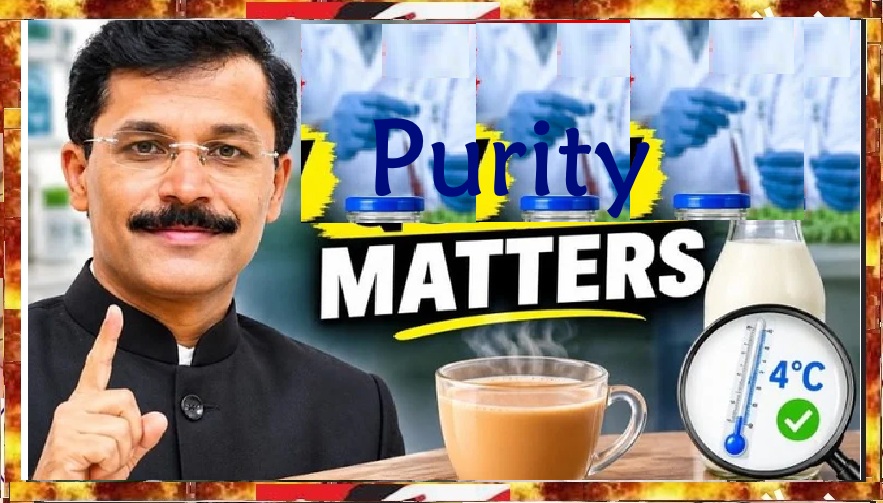
IAS Tukaram Mundhe Highlights Why Milk Quality and Safe Storage Matter More Than Your Tea-Drinking Habit
For millions of Indians, tea is an essential part of the daily routine. But while people often debate how much tea they should drink, far less attention is paid to an equally important question: Is the milk used in that cup safe and properly stored?
IAS officer Tukaram Mundhe, a 2005-batch Maharashtra cadre officer, has drawn attention to this everyday food safety concern. Since taking charge at Maharashtra’s Food and Drug Administration (FDA), Mundhe has been in the spotlight for action against food adulteration, with inspections being carried out at hotels, restaurants, bakeries and other food establishments.
Speaking at a public event, he explained the journey milk undertakes before reaching consumers and emphasised the importance of maintaining proper temperature and hygiene throughout the supply chain.
IAS Tukaram Mundhe Explains How Milk Reaches Consumers
Mundhe highlighted that milk’s journey does not end with packaging. It passes through several stages before reaching a consumer’s kitchen, including transportation, storage at retail outlets and eventual delivery to households.
At every stage, maintaining appropriate temperature and hygienic conditions is essential to preserving milk quality. However, consumers often have little information about the conditions in which milk is transported or stored before they purchase it.
They may not know whether the required cooling was maintained during transportation or whether the retailer stored the packets under suitable conditions.Mundhe also made an observation about India’s tea-drinking culture. Although tea is consumed regularly across the country, a typical cup often contains more milk and sugar than tea leaves.
His larger point was that consumers should pay attention not only to their tea-drinking habits but also to the quality and safety of the milk they consume.
Why Milk Should Be Stored at 4°C or Below
According to Mundhe, milk should be maintained at approximately 4°C or lower to help preserve its quality and reduce the risk of spoilage. Refrigeration slows bacterial growth and helps prevent milk from deteriorating quickly. If milk remains exposed to higher temperatures for an extended period, the chances of spoilage increase.
This makes temperature control an important part of the entire supply chain. Simply checking the packaging is not enough; consumers should also be aware of the conditions under which milk has been transported and stored at retail outlets.
Maintaining the cold chain until the product reaches the consumer is therefore essential. After purchasing milk, consumers should take it home promptly and refrigerate it in accordance with the storage instructions printed on the packaging.
What Should Regular Tea Drinkers Keep in Mind?
Mundhe’s message is not about asking people to give up tea. Instead, it highlights the need to become more conscious of the quality and safety of everyday food products.
Consumers can take a few basic precautions:
* Choose reliable sources: Purchase milk from trusted suppliers and retailers.
* Check the packaging: Read the storage instructions and follow the manufacturer’s guidance.
* Avoid unnecessary delays: Take milk home promptly after purchase.
* Refrigerate appropriately: Store milk as directed, maintaining the recommended temperature.
* Check for signs of spoilage: Avoid consuming milk if it develops an unusual smell, colour or appearance.
The broader concern is that milk safety depends not merely on its source or packaging but also on how it is handled throughout its journey from processing and transportation to retail storage and the consumer’s refrigerator.
A Reminder About Everyday Food Safety
Mundhe’s observations bring attention to an aspect of food safety that is often overlooked in everyday life. Consumers may focus on the quantity of tea or the type of milk they purchase, but the conditions under which milk is transported and stored are equally important.
For regular tea drinkers, the message is straightforward: before worrying about how many cups of tea they consume, they should pay attention to the quality and safe handling of the milk that goes into them.
Maintaining proper temperature, hygiene and storage practices across the supply chain is essential to ensuring that an everyday household product remains safe for consumption.